Editorial Note
CurioReader Editorial Note: This article is intended for educational purposes and presents geopolitics as an academic field of study. Geopolitical issues often involve multiple perspectives shaped by history, geography, economics, culture, and national interests. CurioReader aims to explain these topics objectively and encourage readers to think critically while consulting a variety of reliable sources.
Introduction
The Complete Guide to Geopolitics: Every day, headlines report on wars, diplomatic meetings, trade disputes, military alliances, energy shortages, migration, and international agreements. At first glance, these events may appear unrelated. However, beneath many of these stories lies a common thread: geopolitics.
Geopolitics is the study of how geography influences politics, economics, security, and international relations. Mountains, oceans, rivers, deserts, natural resources, and strategic trade routes all shape how nations interact with one another. A country’s location can influence its security, economy, alliances, and even its role on the global stage.
Throughout history, geography has played a decisive role in the rise and fall of civilizations. Ancient empires expanded along fertile river valleys, maritime powers built wealth through trade, and modern nations compete for access to resources, technology, and strategic regions. While today’s world is more interconnected than ever before, geography continues to influence many of the most important international decisions.
Understanding geopolitics helps explain why countries cooperate in some situations and compete in others. It provides valuable context for interpreting world events rather than viewing them as isolated incidents.
In this comprehensive guide, you’ll explore the origins of geopolitics, the importance of geography, the evolution of political boundaries, and the fundamental concepts that shape international affairs. Whether you’re a student, professional, or simply curious about global events, this guide will provide a solid foundation for understanding the forces that influence our world.
💡 CurioReader Insight
Many major news stories become easier to understand once you know the geographical, historical, and economic factors behind them. Geopolitics focuses on those underlying forces rather than individual events.
🌍 Did You Know?
More than 90% of global trade by volume is transported by sea. This makes oceans, ports, and narrow maritime passages some of the world’s most strategically important locations.
What Is Geopolitics?
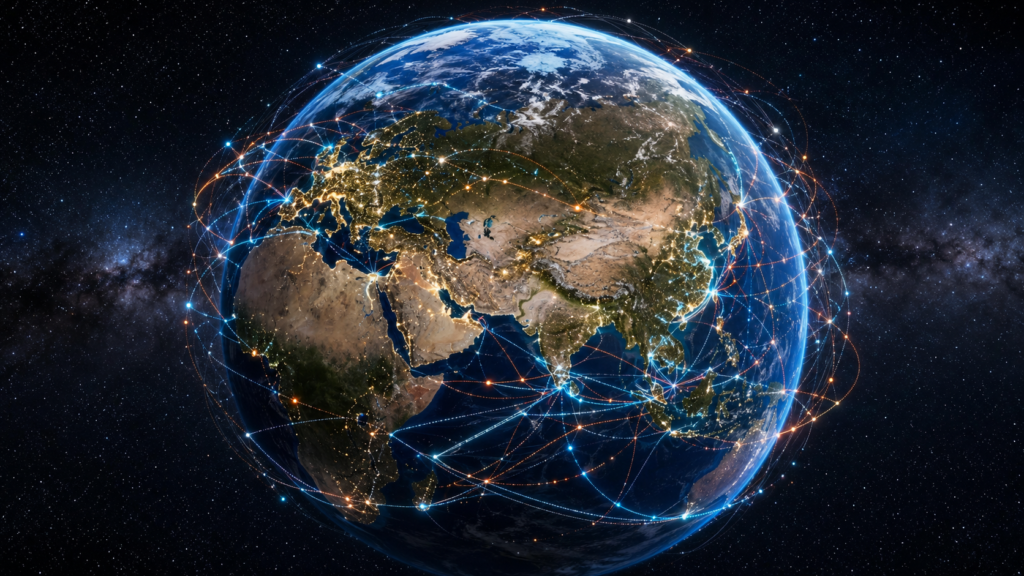
Geopolitics is the study of how geographical factors influence the policies and relationships of countries.
These geographical factors include:
- Physical location
- Climate
- Natural resources
- Mountains
- Rivers
- Oceans
- Coastlines
- Borders
- Population distribution
However, modern geopolitics extends beyond physical geography. It also considers:
- Economics
- Technology
- Energy security
- International law
- Military capabilities
- Diplomacy
- Cybersecurity
- Space activities
Simply put, geopolitics examines how nations pursue their interests within the physical and political realities of the world.
For example:
- A country with extensive coastlines may prioritize naval power.
- A nation rich in oil or rare minerals may have significant economic influence.
- Landlocked countries often depend heavily on neighboring states for trade access.
- Nations located along major shipping routes frequently become strategically important.
Geopolitics is therefore not about predicting conflict—it is about understanding the complex interactions between geography and human decision-making.
Key Terms
Geopolitics: The study of how geography influences international politics, economics, and security.
Geography: The physical features and human characteristics of Earth’s surface.
State: A political entity with defined territory, a permanent population, a government, and sovereignty.
Sovereignty: The authority of a state to govern itself without external interference.
Foreign Policy: A country’s approach to managing relationships with other nations.
Why Geography Matters
Modern technology has transformed communication and transportation, but geography remains one of the most powerful influences on international affairs.
Countries cannot change where they are located.
Their physical surroundings create opportunities and challenges that often last for centuries.
Access to the Sea
Countries with coastlines often enjoy significant advantages.
Sea access allows:
- International trade
- Fishing industries
- Naval defense
- Port development
- Global shipping connections
Historically, maritime nations such as Portugal, Spain, and later the United Kingdom expanded their influence through overseas trade and exploration.
Today, many of the world’s busiest ports remain located in coastal countries.
Natural Resources
The availability of natural resources strongly influences national development.
Important resources include:
- Oil
- Natural gas
- Coal
- Fresh water
- Fertile farmland
- Timber
- Rare earth minerals
- Critical metals
Access to these resources can strengthen economies, attract investment, and shape foreign policy.
At the same time, competition for valuable resources has contributed to tensions and conflicts in various parts of the world throughout history.
Mountains and Rivers
Natural features often influence borders, transportation, and defense.
Mountains may:
- Create natural barriers.
- Limit movement.
- Protect territories.
- Influence weather patterns.
Rivers often:
- Support agriculture.
- Provide transportation routes.
- Supply drinking water.
- Serve as international borders.
Many of the world’s oldest civilizations developed along major rivers because they offered fertile land and reliable water sources.
Climate
Climate also affects geopolitics.
It influences:
- Agriculture
- Population distribution
- Water availability
- Infrastructure
- Disaster preparedness
- Economic activities
Climate change is increasingly becoming a geopolitical issue as countries respond to rising sea levels, changing weather patterns, and resource pressures.
📖 Historical Perspective
Ancient Egypt flourished along the Nile River, while the Roman Empire expanded around the Mediterranean Sea. Centuries later, European maritime powers built global empires through ocean trade. Although technology has changed dramatically, geography continues to influence international strategy in similar ways today.
A Brief History of Geopolitics
Although geography has always influenced politics, the academic study of geopolitics developed during the late nineteenth and early twentieth centuries.
Scholars began examining how physical geography affected the power and security of nations.
Early geopolitical thinkers emphasized factors such as:
- Territorial control
- Sea power
- Land power
- Strategic location
- Access to resources
Over time, the field expanded significantly.
Today, geopolitics also includes:
- International economics
- Cybersecurity
- Space exploration
- Global supply chains
- Artificial intelligence
- Environmental security
- International organizations
Rather than focusing solely on military competition, modern geopolitics recognizes that economic influence, diplomacy, technological innovation, and global cooperation all shape international relationships.
🌍 Did You Know?
The term “geopolitics” was first introduced by Swedish political scientist Rudolf Kjellén in 1899. Since then, the field has evolved considerably and now draws on geography, political science, economics, history, and international relations.
Understanding the World’s Political Map
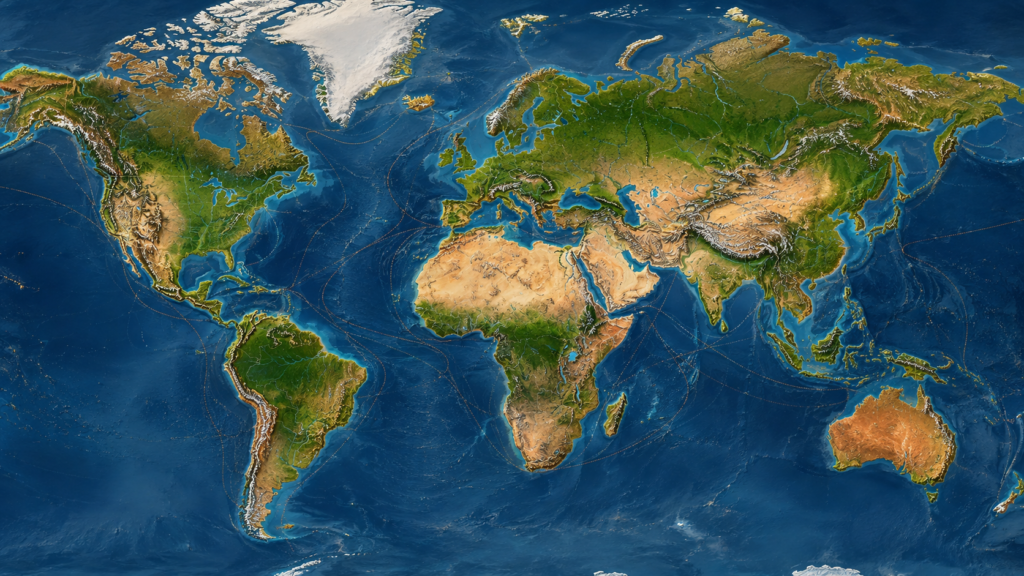
The modern world consists of nearly 200 internationally recognized sovereign states, each with its own government, borders, laws, and national interests.
Political maps show these countries and their boundaries, but they also reveal broader geopolitical patterns.
Countries vary enormously in:
- Land area
- Population
- Economic strength
- Military capability
- Natural resources
- Political systems
Some countries possess vast territories but relatively small populations, while others have limited land yet play major roles in global finance, technology, or diplomacy.
Political boundaries themselves are not always permanent.
Throughout history, borders have changed because of:
- Wars
- Treaties
- Independence movements
- Political unions
- Peace agreements
- Decolonization
Understanding these historical changes helps explain many contemporary international issues.
The Building Blocks of Geopolitics
Modern geopolitics is built upon several interconnected concepts.
National Interest
Every government seeks to protect what it considers its national interests.
These often include:
- Security
- Economic prosperity
- Political stability
- Territorial integrity
- Energy supplies
- International influence
Different countries may define their priorities differently based on their geography, history, and circumstances.
Power
Power is central to geopolitics.
It extends beyond military strength.
Countries may exercise influence through:
- Economic power
- Diplomatic relationships
- Scientific innovation
- Cultural influence
- Technology
- Education
- International aid
Modern international influence often depends on combining several forms of power rather than relying on military capability alone.
Borders
Borders define where one country’s authority ends and another’s begins.
They influence:
- Immigration
- Customs
- Trade
- National security
- Resource management
Some borders are clearly recognized, while others remain disputed.
Understanding borders requires considering history, geography, international law, and diplomacy.
Interdependence
Globalization has made countries increasingly interconnected.
Nations depend on one another for:
- Energy
- Food
- Technology
- Manufacturing
- Investment
- Transportation
- Scientific cooperation
This interdependence creates opportunities for cooperation while also increasing the impact of international disruptions.
Myth vs. Fact
| Myth | Fact |
|---|---|
| Geopolitics is only about war. | Geopolitics includes economics, trade, diplomacy, technology, energy, climate, and international cooperation. |
| Geography no longer matters because of the internet. | Digital technologies have transformed communication, but geography still shapes trade routes, resource access, transportation, and national security. |
| Powerful countries always control world affairs. | Influence depends on many factors, including alliances, economics, diplomacy, innovation, and geography—not military strength alone. |
Case Study: Why the Suez Canal Matters
The Suez Canal in Egypt connects the Mediterranean Sea with the Red Sea, providing one of the shortest maritime routes between Europe and Asia.
Because a large share of global shipping passes through this narrow waterway, disruptions can have worldwide economic consequences. Delays may affect energy supplies, manufacturing, and consumer goods across multiple continents.
This example demonstrates how a relatively small geographic location can have an outsized influence on global trade and international politics.
📦 Quick Summary
- Geopolitics examines how geography influences international affairs.
- Physical geography continues to shape politics despite technological advances.
- Natural resources, coastlines, rivers, and climate affect national strategies.
- Modern geopolitics includes economics, technology, diplomacy, and environmental issues.
- Countries pursue national interests while operating in an increasingly interconnected world.
Global Superpowers and Emerging Powers
No single country can influence every aspect of international affairs on its own. Instead, global politics is shaped by nations with varying degrees of military, economic, technological, diplomatic, and cultural influence.
A superpower is generally understood to be a country capable of projecting significant influence across multiple regions of the world. This influence may come from military strength, economic size, technological innovation, global alliances, or cultural reach.
Today, international relations are increasingly described as multipolar, meaning influence is distributed among several major powers rather than concentrated in just one or two countries. While different experts may debate which countries qualify as global powers, there is broad agreement that the United States, China, the European Union (as a political and economic bloc), India, Russia, and several other nations play important roles in shaping international affairs.
Rather than viewing power as a fixed ranking, it is more useful to think of it as a combination of strengths in different areas.
What Makes a Country Powerful?
National influence depends on many interconnected factors.
Economic Strength
A strong economy enables governments to:
- Invest in infrastructure.
- Fund scientific research.
- Maintain public services.
- Build military capabilities.
- Support international development projects.
Countries with diversified economies often have greater flexibility during periods of global uncertainty.
Military Capability
Military strength contributes to national defense and international security partnerships.
Modern military capability includes:
- Well-trained personnel
- Naval forces
- Air power
- Cyber defense
- Space capabilities
- Intelligence gathering
- Advanced technologies
However, military power alone rarely determines international influence.
Technological Leadership
Innovation increasingly shapes geopolitical influence.
Countries investing heavily in:
- Artificial intelligence
- Semiconductor manufacturing
- Biotechnology
- Renewable energy
- Quantum computing
- Space technology
often gain strategic advantages that extend beyond traditional military power.
Diplomatic Influence
Diplomacy allows countries to build partnerships, negotiate agreements, and resolve disputes peacefully.
Diplomatic influence often depends on:
- Trust
- International reputation
- Long-term relationships
- Participation in international organizations
Soft Power
Not all influence comes from economic or military strength.
Soft power refers to the ability to influence others through attraction rather than coercion.
Examples include:
- Education
- Culture
- Scientific achievements
- Humanitarian assistance
- Sports
- Entertainment
- International development programs
Countries with strong soft power often shape global opinions without relying on force.
💡 CurioReader Insight
Modern geopolitics is increasingly influenced by knowledge, innovation, and technology. In many situations, a country’s research institutions, universities, technology companies, and scientific achievements can be just as influential as its military capabilities.
Strategic Resources: Why Natural Resources Matter
Throughout history, access to natural resources has influenced economic development, international cooperation, and, at times, conflict.
Today, countries compete not only for traditional resources but also for the materials needed to power modern technologies.
Energy Resources
Energy remains one of the most important geopolitical considerations.
Major energy sources include:
- Oil
- Natural gas
- Coal
- Nuclear energy
- Hydroelectric power
- Solar energy
- Wind energy
Countries that produce large amounts of energy may become important trading partners, while countries that rely heavily on imports often prioritize energy security.
Recent decades have also seen growing investment in renewable energy as nations seek to diversify their energy supplies and reduce emissions.
Critical Minerals
Modern technologies depend on minerals that many people rarely think about.
Examples include:
- Lithium
- Cobalt
- Nickel
- Graphite
- Rare earth elements
These materials are essential for:
- Electric vehicles
- Smartphones
- Wind turbines
- Batteries
- Computer chips
- Defense technologies
As demand increases, securing reliable supplies has become an important geopolitical priority for many countries.
Water Security
Fresh water is another increasingly important strategic resource.
Population growth, urbanization, agriculture, and climate change place pressure on water supplies in many regions.
Countries sharing rivers or underground water resources often cooperate through international agreements, although disagreements can also arise over water management.
🌍 Did You Know?
Although rare earth elements are not actually “rare” in Earth’s crust, they are difficult and costly to extract and process. They play a vital role in modern electronics, renewable energy systems, and advanced defense technologies.
Global Trade Routes: The Arteries of the World Economy
International trade depends on efficient transportation networks.
Ships, aircraft, railways, roads, and pipelines connect producers with consumers across continents.
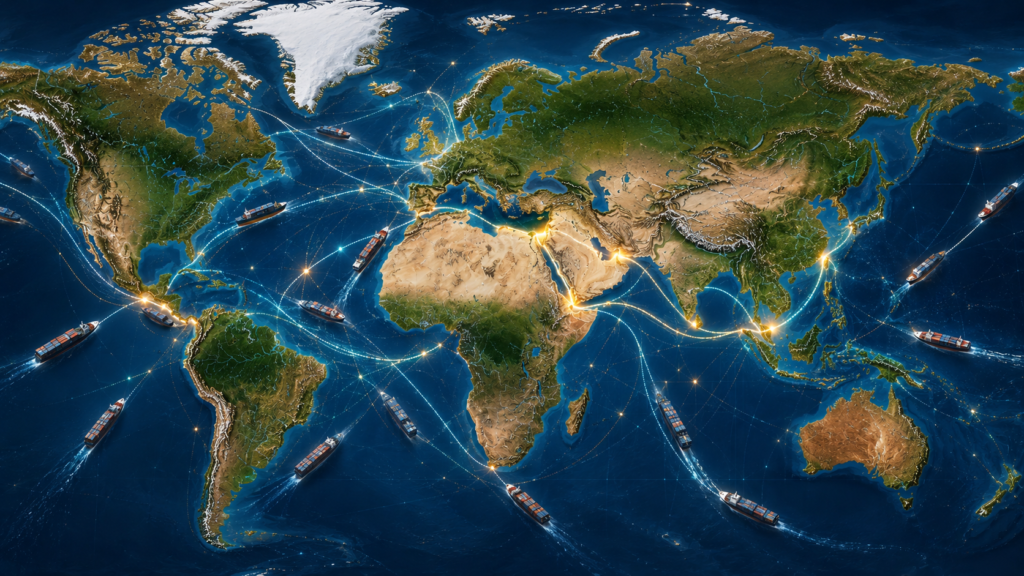
Among these, maritime shipping remains the backbone of global trade.
Because transporting large quantities of goods by sea is relatively cost-effective, most international merchandise trade travels through major shipping lanes.
These routes connect:
- Manufacturing centers
- Resource-producing regions
- Consumer markets
- Major ports
Disruptions to important shipping routes can affect supply chains around the world.
Strategic Maritime Chokepoints
Certain narrow waterways carry enormous volumes of international trade.
These locations are often called maritime chokepoints because large amounts of shipping pass through relatively small geographic areas.
Strait of Hormuz
Located between the Persian Gulf and the Gulf of Oman, this passage is one of the world’s most important energy transportation routes.
Large quantities of globally traded oil and liquefied natural gas pass through it each day.
Strait of Malacca
Connecting the Indian Ocean and the Pacific Ocean, the Strait of Malacca is one of the busiest shipping lanes in the world.
It serves as a major route linking Asia, Europe, the Middle East, and Africa.
Suez Canal
The Suez Canal connects the Mediterranean Sea with the Red Sea.
It significantly shortens shipping distances between Europe and Asia by eliminating the need to sail around southern Africa.
Even temporary disruptions can affect global supply chains.
Panama Canal
The Panama Canal connects the Atlantic and Pacific Oceans.
It saves ships thousands of kilometers by allowing them to cross Central America rather than sailing around South America.
Why Chokepoints Matter
Because so much trade passes through these locations, governments pay close attention to their security, maintenance, and accessibility.
Natural disasters, accidents, or political instability affecting these routes may influence international trade and transportation costs.
Economic Influence in the Modern World
Economic relationships increasingly shape international politics.
Countries influence one another through:
- Trade agreements
- Investment
- Financial markets
- Technology partnerships
- Infrastructure development
- Supply chains
Rather than competing only through military strength, nations frequently use economic tools to pursue foreign policy objectives.
Global Supply Chains
Modern products are rarely manufactured entirely within one country.
For example, a smartphone might involve:
- Minerals mined in Africa.
- Components manufactured in East Asia.
- Software developed in North America.
- Final assembly in another country.
- Sales worldwide.
This interconnected production system is known as a global supply chain.
Supply chains increase efficiency but can also become vulnerable to disruptions caused by natural disasters, pandemics, transportation issues, or geopolitical tensions.
Economic Sanctions
Countries sometimes impose economic sanctions to influence the behavior of other governments.
Sanctions may involve:
- Trade restrictions
- Financial limitations
- Export controls
- Asset freezes
Their objectives vary depending on the situation, and their effectiveness is often debated by policymakers and researchers.
CurioReader Case Study
During the COVID-19 pandemic, global supply chains experienced significant disruptions. Factory closures, transportation delays, and changing consumer demand affected industries ranging from automobiles to electronics. The experience highlighted how interconnected the global economy has become and why resilience in supply chains is now a major geopolitical concern.
Alliances and International Organizations
No country operates entirely alone.
International organizations provide forums for cooperation on issues such as security, trade, health, development, and environmental protection.
North Atlantic Treaty Organization (NATO)
NATO is a security alliance established in 1949.
Its members cooperate on collective defense, meaning an attack against one member is considered an attack against all under the alliance’s founding treaty.
European Union (EU)
The European Union is both an economic and political partnership among European countries.
It promotes:
- Free movement of goods
- Economic cooperation
- Shared regulations
- Political collaboration
Not every European country is a member of the EU.
BRICS
BRICS originally referred to Brazil, Russia, India, China, and South Africa.
In recent years, the group has expanded to include additional members, reflecting growing cooperation among several emerging economies.
BRICS focuses on economic collaboration, development, and increasing the representation of developing countries in global institutions.
G7
The Group of Seven (G7) brings together several of the world’s largest advanced economies.
Its leaders regularly meet to discuss issues such as:
- Economic stability
- Security
- Climate
- Energy
- Technology
G20
The Group of Twenty (G20) includes both advanced and emerging economies.
Collectively, G20 members represent a large share of global:
- Population
- Trade
- Economic output
Its discussions often focus on international economic cooperation and sustainable development.
United Nations
The United Nations provides an international forum where countries discuss:
- Peace and security
- Human rights
- Humanitarian assistance
- Sustainable development
- International law
Although member states may disagree on many issues, the UN remains one of the world’s most important institutions for international dialogue.
Myth vs. Fact
| Myth | Fact |
|---|---|
| Military strength alone determines global influence. | Economic performance, technology, diplomacy, geography, and international partnerships are equally important. |
| International organizations can solve every global problem. | They facilitate cooperation but depend on the decisions and cooperation of their member states. |
| Global trade benefits only large economies. | International trade affects countries of all sizes by creating opportunities, challenges, and economic interdependence. |
📦 Quick Summary
- National power is shaped by economics, technology, diplomacy, military capability, and soft power.
- Energy resources and critical minerals remain strategically important.
- Maritime trade routes are essential to the global economy.
- Chokepoints such as the Suez Canal and Strait of Malacca influence international commerce.
- Global supply chains connect economies across continents.
- International organizations help countries cooperate on shared challenges.
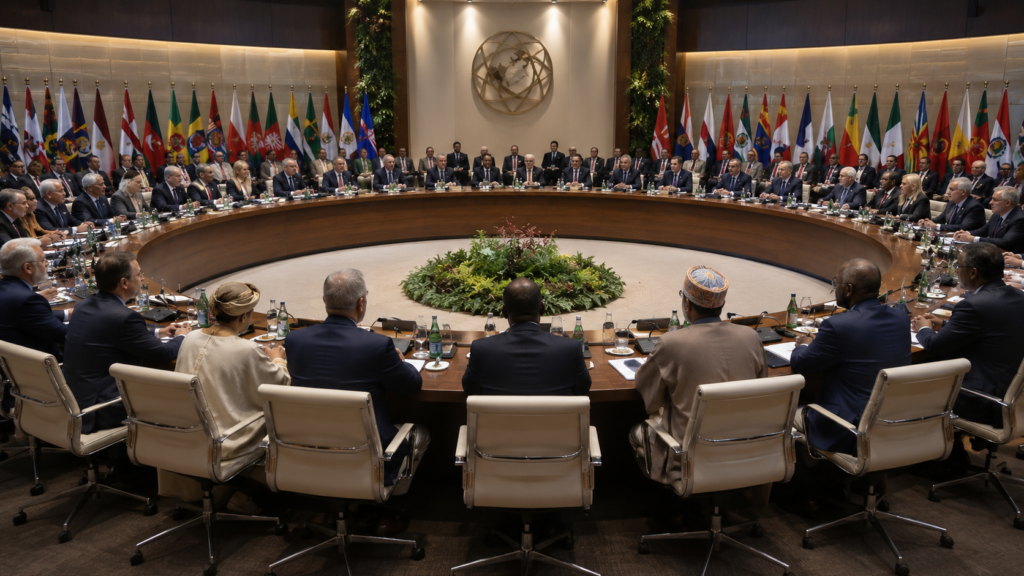
Modern Global Conflicts: Understanding the Bigger Picture
News headlines often focus on individual conflicts, but geopolitics encourages us to look beyond immediate events and examine the broader forces that shape them.
Modern conflicts rarely arise from a single cause. Instead, they are usually influenced by a combination of factors, including:
- Historical disputes
- Territorial claims
- Political ideology
- Competition for natural resources
- Economic interests
- National security concerns
- Ethnic and cultural identities
- International alliances
Understanding these underlying factors helps explain why some disputes continue for decades while others are resolved through diplomacy.
It is important to recognize that every conflict is unique. While geopolitical analysis examines patterns and strategic interests, it should never overlook the human cost of war, including loss of life, displacement, and humanitarian suffering.
Territorial Disputes
Borders have changed throughout history because of wars, treaties, colonization, and political change.
Today, some regions remain disputed because different countries or groups claim the same territory.
Territorial disputes may involve:
- Land borders
- Islands
- Maritime boundaries
- Airspace
- Natural resources
Many disputes are managed peacefully through international negotiations or legal processes, while others remain unresolved for years.
Resource Competition
Access to valuable resources continues to influence international relations.
Countries may cooperate—or compete—for access to:
- Fresh water
- Energy supplies
- Fishing grounds
- Agricultural land
- Critical minerals
- Offshore resources
As global demand increases, sustainable resource management becomes increasingly important.
🌍 Did You Know?
Some international rivers pass through more than ten countries. Agreements governing shared water resources are therefore important examples of international cooperation.
Cyber Geopolitics: Power in the Digital Age
Geopolitics is no longer limited to land, sea, and air.
Today, cyberspace has become another strategic domain.
Countries invest heavily in protecting:
- Government networks
- Financial systems
- Energy infrastructure
- Healthcare systems
- Transportation networks
- Communications systems
Cybersecurity has become an important national security issue because digital systems support nearly every aspect of modern society.
Governments also cooperate internationally to combat cybercrime and strengthen digital resilience.
Digital Infrastructure
Modern economies depend on digital infrastructure, including:
- Internet cables
- Data centers
- Satellite communications
- Cloud computing
- Mobile networks
Submarine fiber-optic cables lying on the ocean floor carry the vast majority of international internet traffic.
Protecting this infrastructure has become increasingly important for governments worldwide.
CurioReader Insight
Although satellites receive much attention, most international internet traffic actually travels through undersea fiber-optic cables stretching thousands of kilometers across the world’s oceans.
Space Geopolitics: The New Frontier
Space has become an increasingly important area of international cooperation and competition.
Satellites support:
- Navigation
- Weather forecasting
- Agriculture
- Disaster response
- Communications
- Scientific research
- National security
As more countries and private companies launch satellites and explore space, questions surrounding space governance continue to grow.
International agreements encourage the peaceful use of outer space, while governments work together on scientific missions and space exploration.
At the same time, protecting satellite infrastructure has become strategically important because many essential services depend upon it.
The New Space Economy
Commercial space activities continue expanding.
Emerging industries include:
- Satellite manufacturing
- Earth observation
- Space tourism
- Lunar exploration
- Asteroid research
- Commercial launch services
Many experts believe the space economy will become increasingly significant during the coming decades.
Artificial Intelligence and Geopolitics
Artificial intelligence (AI) is transforming economies, industries, and international competition.
Countries are investing in AI because of its potential applications in:
- Healthcare
- Scientific research
- Manufacturing
- Agriculture
- Education
- Transportation
- National security
AI has become a strategic technology similar to previous industrial revolutions.
Leadership in AI depends not only on algorithms but also on:
- Research institutions
- Skilled professionals
- Computing infrastructure
- Semiconductor manufacturing
- Data availability
- Responsible governance
Many governments are also working together to develop principles for the safe and ethical use of AI.
💡 CurioReader Tip
Future geopolitical influence is likely to depend increasingly on innovation, education, and scientific research rather than solely on traditional military strength.
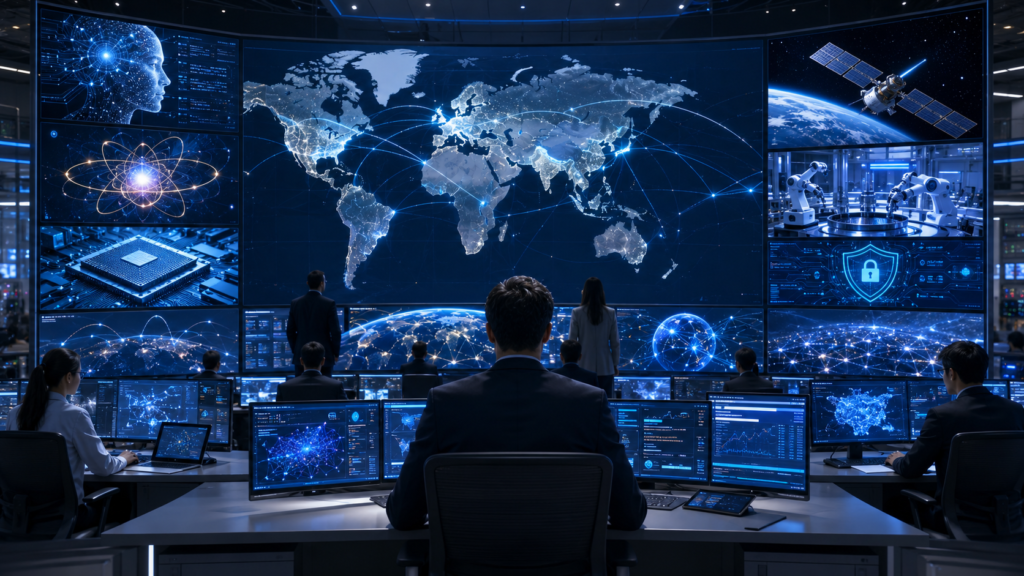
Climate Change and Geopolitics
Climate change is becoming one of the defining geopolitical challenges of the twenty-first century.
Its effects may influence:
- Agriculture
- Water resources
- Coastal communities
- Infrastructure
- Migration
- Energy systems
- Disaster preparedness
Because climate change crosses national borders, international cooperation plays an important role in addressing shared environmental challenges.
Governments increasingly collaborate on:
- Renewable energy
- Climate adaptation
- Emissions reduction
- Disaster response
- Scientific research
While countries may differ in their policies and priorities, climate change has become an important part of international diplomacy.
Globalization: Cooperation and Competition
Globalization has connected countries more closely than ever before.
International trade, travel, technology, and communication allow ideas, goods, and services to move rapidly across borders.
Globalization has contributed to:
- Economic growth
- Scientific collaboration
- Cultural exchange
- International education
- Technological innovation
At the same time, it has also highlighted challenges such as supply chain resilience, cybersecurity, and economic dependence.
Modern geopolitics therefore involves balancing national interests with international cooperation.
The Future of Geopolitics
Geopolitics will continue evolving as new technologies and global challenges emerge.
Several trends are likely to shape future international relations.
Multipolar World
Many analysts believe the world is becoming increasingly multipolar, with influence shared among several major powers rather than dominated by a single country.
Energy Transition
As countries expand renewable energy and adopt new technologies, energy security strategies are likely to evolve.
Critical minerals may become increasingly important alongside traditional energy resources.
Technological Competition
Future competition may increasingly focus on:
- Artificial intelligence
- Quantum computing
- Biotechnology
- Semiconductor production
- Space technology
Innovation is becoming a central element of national competitiveness.
Arctic Development
As Arctic sea ice changes over time, new shipping routes and resource opportunities may emerge, increasing international interest in the region.
Environmental protection and international cooperation will remain important considerations.
Demographic Change
Population growth, aging societies, and migration patterns are expected to influence labor markets, healthcare systems, urban development, and economic planning.
📖 Historical Perspective
History shows that geopolitical systems are constantly changing. Ancient empires gave way to kingdoms. Kingdoms evolved into nation-states. Colonial empires declined. The Cold War ended. Today’s international system will also continue evolving as technology, economics, and global cooperation reshape the balance of influence.
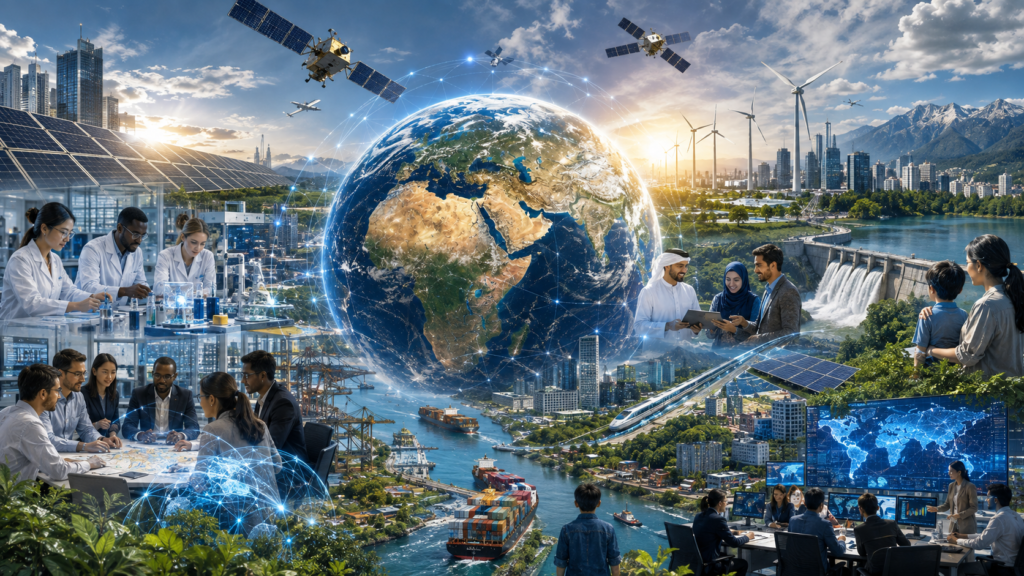
Why Geopolitics Matters to Everyone
Some people assume geopolitics concerns only governments or diplomats.
In reality, geopolitical decisions influence everyday life in many ways.
They affect:
- Fuel prices
- Food supplies
- Consumer goods
- International travel
- Internet infrastructure
- Employment
- Technology
- Energy availability
- Environmental policies
Understanding geopolitics helps citizens interpret world events more thoughtfully and appreciate how global developments can influence local communities.
Myth vs. Fact
| Myth | Fact |
|---|---|
| Geopolitics is only about military conflict. | It also includes economics, trade, technology, diplomacy, climate, cybersecurity, and international cooperation. |
| Geography matters less because of globalization. | Geography continues to shape trade routes, natural resources, transportation, and national security. |
| Powerful countries always act independently. | Even the most influential nations rely on partnerships, trade, diplomacy, and international organizations. |
Frequently Asked Questions
What is geopolitics?
Geopolitics is the study of how geography influences international politics, economics, security, and relations between countries.
Why is geography still important today?
Although technology has transformed communication and transportation, geography continues to shape access to resources, trade routes, borders, climate, and strategic locations.
Is geopolitics only about war?
No. Geopolitics also examines diplomacy, economics, technology, environmental issues, international organizations, and global cooperation.
What is a superpower?
A superpower is generally considered a country with significant global influence across multiple areas, including economics, military capability, diplomacy, technology, and culture.
How does geopolitics affect ordinary people?
Geopolitical developments influence energy prices, food supplies, international trade, travel, technology, employment, and many aspects of everyday life.
Key Takeaways
- Geopolitics explains how geography influences international affairs.
- National power is shaped by geography, economics, technology, diplomacy, military capability, and soft power.
- Strategic resources and maritime trade routes remain essential to global stability.
- Cybersecurity, artificial intelligence, and space are increasingly important geopolitical domains.
- Climate change and demographic shifts are reshaping international priorities.
- International organizations provide opportunities for cooperation on shared challenges.
- Understanding geopolitics helps people interpret world events within a broader historical and geographical context.
Conclusion
Geopolitics is far more than the study of maps or international disputes. It is an interdisciplinary field that brings together geography, history, economics, political science, technology, and environmental studies to explain how nations interact in an increasingly interconnected world.
Throughout this guide, we have explored how physical geography continues to influence global affairs, why strategic resources and trade routes matter, how alliances and international organizations shape cooperation, and how emerging issues such as cybersecurity, artificial intelligence, climate change, and space exploration are transforming the geopolitical landscape.
While international relations can sometimes appear unpredictable, understanding the underlying geographical and strategic factors provides valuable context for interpreting global events. Geopolitics encourages us to look beyond headlines and consider the long-term forces that influence cooperation, competition, and decision-making among nations.
As technology advances and new global challenges emerge, geopolitics will continue evolving. Developing a deeper understanding of this subject not only enhances our knowledge of world affairs but also helps us become more informed global citizens capable of thinking critically about the complex relationships that shape our future.
Further Reading & Resources
Continue your learning journey with more expert guides and insightful articles from CurioReader. Explore related topics below to deepen your understanding and discover new perspectives.
Related CurioReader Articles
Recommended External Resources