Introduction
What Happens After Death? Death is one of the few experiences every human being shares, yet it remains one of life’s greatest mysteries. From ancient civilizations to modern scientists, people have long asked the same profound question: What happens after death?
For thousands of years, this question has inspired religions, philosophies, scientific research, literature, and countless personal reflections. While science has greatly expanded our understanding of how the body dies, it has not provided a definitive answer about whether consciousness continues after death. As a result, different cultures, faiths, and philosophical traditions offer their own interpretations, each shaped by history, belief, and human experience.
For many people, the question is deeply personal. It may arise after losing a loved one, facing a serious illness, or simply wondering about the meaning of life. Others approach it out of curiosity, hoping to better understand one of humanity’s oldest and most universal questions.
It is important to recognize that this topic has no universally accepted answer. Science investigates questions using observation and evidence, while philosophy explores questions through logic and reasoning, and religions provide answers based on faith and sacred teachings. Each offers valuable perspectives, but they approach the mystery of death in different ways.
This guide does not attempt to prove or disprove any particular belief. Instead, it explores what modern science currently understands about death, examines major philosophical ideas, and presents the beliefs of several of the world’s largest religions with respect and neutrality. By understanding these perspectives, readers can gain a broader appreciation of how different people have sought meaning in one of life’s greatest unknowns.
🧠 Did You Know? Every known human civilization has developed beliefs or rituals surrounding death. Archaeological discoveries show that burial practices existed tens of thousands of years ago, suggesting that humans have long reflected on what might happen after life ends.
What Is Death? A Scientific Perspective
Although death is often discussed in philosophical or religious terms, science begins with a biological definition.
Simply put, death is the permanent end of the body’s ability to function as an integrated living organism. It occurs when vital systems can no longer sustain life and cannot be restored through medical treatment.
Modern medicine recognizes that death is usually a process rather than a single moment. Different organs stop functioning at different times, and the body undergoes several biological changes before all cellular activity eventually ceases.
Understanding this process helps explain what scientists currently know—and what remains uncertain.
Clinical Death
Clinical death occurs when a person’s heartbeat stops and breathing ceases.
Without oxygen-rich blood reaching the brain and other organs, cells begin to lose their ability to function.
Today, clinical death is not always permanent. Advances in emergency medicine mean that some people can be successfully resuscitated through CPR, defibrillation, or advanced life support if treatment begins quickly.
This is why clinical death and permanent death are not exactly the same thing.
Brain Death
Brain death is different from clinical death.
Brain death occurs when all functions of the brain, including the brainstem, have permanently stopped.
The brainstem controls essential functions such as:
- Breathing
- Consciousness
- Reflexes
- Heart regulation
Unlike temporary unconsciousness or coma, brain death is considered irreversible with current medical knowledge.
In many countries, brain death is legally recognized as death, even if machines temporarily maintain breathing and circulation.
💡 CurioReader Tip: Brain death should not be confused with a coma. A person in a coma still has some brain activity and may recover, whereas brain death involves the complete and irreversible loss of brain function.
What Happens to the Body After Death?
When the heart permanently stops pumping blood, oxygen is no longer delivered to the body’s cells.
As a result:
- Brain cells begin to lose function within minutes.
- Organs gradually stop working.
- Muscles relax before later becoming stiff through a process called rigor mortis.
- Body temperature slowly decreases.
- Natural biological processes eventually begin breaking down tissues.
These changes are well understood through medical science and forensic research.
While the biological process of dying has been studied extensively, understanding what happens to consciousness remains far more challenging.
What Happens to the Brain?
The brain is the body’s most complex organ.
It contains billions of neurons communicating through electrical and chemical signals.
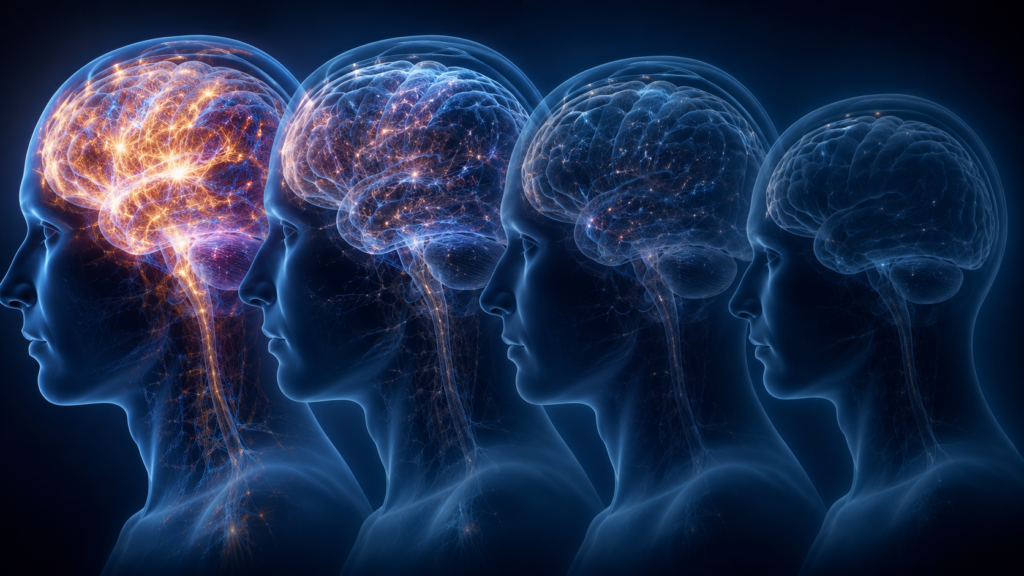
When blood flow stops, brain cells quickly lose their oxygen supply.
Without oxygen:
- Electrical activity decreases.
- Communication between neurons stops.
- Brain tissue begins to deteriorate.
Current scientific understanding suggests that consciousness depends on normal brain function. Therefore, when brain function permanently ceases, conscious awareness also appears to end.
However, scientists continue studying consciousness because many aspects of how conscious experience arises remain incompletely understood.
🔬 Science Says: Neuroscience has shown strong evidence that thoughts, memories, emotions, and perception are closely linked to brain activity. However, researchers continue investigating one of science’s biggest unanswered questions: how consciousness itself emerges from the brain.
What Does Science Say About Life After Death?
Science has transformed our understanding of biology, medicine, and the human brain. Yet when it comes to what happens after death, scientific knowledge has clear limits.
Unlike questions that can be tested repeatedly through experiments, the possibility of an afterlife cannot currently be confirmed or disproved using scientific methods.
Instead, researchers focus on questions that can be investigated through observation and evidence.
Consciousness and the Brain
One of the central questions is whether consciousness can exist independently of the brain.
Modern neuroscience generally views consciousness as closely connected to brain activity.
Every known mental experience—including memory, perception, language, emotion, and decision-making—changes when specific parts of the brain are injured or altered.
This suggests a strong relationship between the physical brain and conscious experience.
However, explaining how billions of neurons produce subjective awareness remains one of science’s greatest mysteries.
Some scientists describe this as the “hard problem of consciousness.”
Despite decades of research, no single theory fully explains why conscious experience exists.
Near-Death Experiences
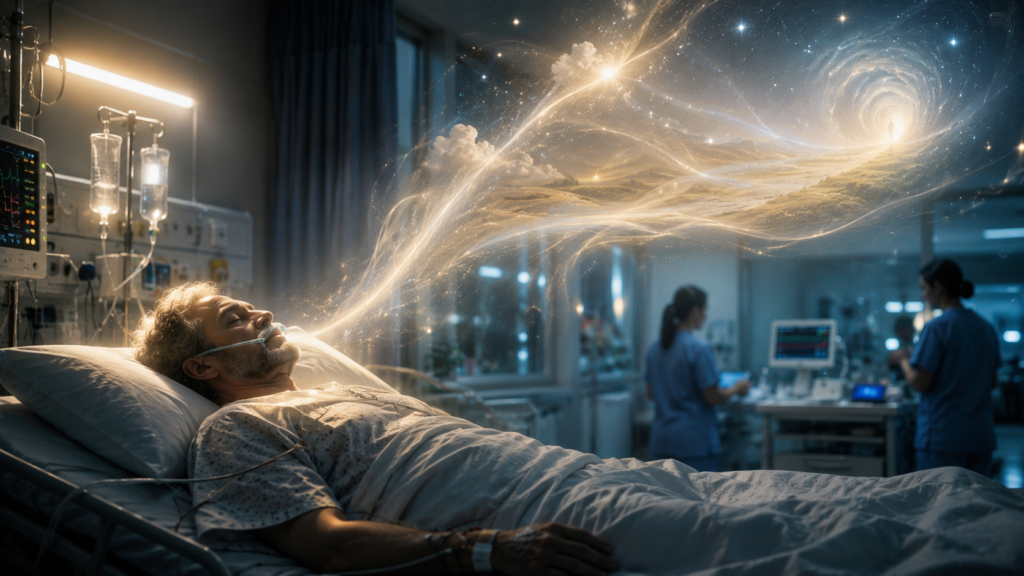
One of the most discussed topics related to death is the phenomenon of near-death experiences (NDEs).
Some people who have been revived after cardiac arrest or other life-threatening events report experiences such as:
- Moving through a tunnel.
- Seeing a bright light.
- Feeling peaceful.
- Observing medical staff from above.
- Encountering deceased relatives.
- Feeling detached from their physical body.
These reports appear in many countries and cultures, although the details often vary.
Scientists have proposed several possible explanations, including:
- Reduced oxygen reaching the brain.
- Temporary changes in brain chemistry.
- Activity in regions associated with memory and perception.
- The brain attempting to interpret unusual physiological events during severe stress.
At present, no single explanation fully accounts for every reported experience.
Importantly, near-death experiences occur in people who later recover. Because these individuals were successfully resuscitated, their experiences do not necessarily reveal what happens after permanent biological death.
⚠️ Common Misconception: Near-death experiences are not considered scientific proof of an afterlife. They are genuine experiences reported by individuals, but researchers continue studying what causes them.
The Limits of Scientific Knowledge
Science is an incredibly powerful tool for understanding the natural world, but it has boundaries.
Scientific conclusions require measurable evidence that can be tested and independently verified.
Questions involving personal belief, spiritual experience, or the existence of realities beyond physical observation often fall outside the scope of scientific investigation.
This does not mean such questions are unimportant.
Rather, it means they are explored through different approaches, including philosophy, religion, and personal reflection.
🌟 CurioReader Insight: One of science’s greatest strengths is its willingness to acknowledge uncertainty. Saying “we don’t yet know” is not a weakness—it’s an honest reflection of where current evidence ends and further questions begin.
📌 Quick Summary
- Science defines death as the irreversible end of the body’s vital functions.
- Clinical death and brain death are different medical concepts.
- Modern neuroscience links consciousness closely to brain activity.
- Near-death experiences continue to be studied but are not considered definitive evidence of an afterlife.
- Science can explain many biological aspects of death, but questions about what happens beyond death remain unanswered by current evidence.
Philosophical Perspectives on Death
Long before modern science existed, philosophers asked many of the same questions we continue to ask today: What is consciousness? Does the mind survive death? What gives life meaning?
Unlike science, which relies on observation and experimentation, philosophy explores these questions through logic, reason, and critical thinking. While philosophers have reached different conclusions, their ideas continue to influence how people understand life and death.
Materialism
Materialism argues that everything about human experience—including thoughts, emotions, memories, and consciousness—is produced by the physical brain.
From this perspective, when the brain permanently stops functioning, consciousness also ends.
Many modern neuroscientists work from this viewpoint because current evidence strongly links mental activity to brain function.
However, materialism does not claim to answer every mystery about consciousness. Instead, it views consciousness as a product of the natural world.
Dualism
Dualism proposes that the mind and body are separate.
According to this view, the physical body may die, while the mind or soul continues to exist in some form.
The philosopher René Descartes famously argued that the mind is fundamentally different from the physical body. His ideas have influenced many religious and philosophical traditions.
Although dualism remains an important philosophical position, there is currently no scientific method to confirm or disprove it.
Existentialism
Existentialist philosophers focused less on what happens after death and more on how awareness of death shapes the way we live.
Rather than offering certainty about an afterlife, existentialism encourages people to create meaning through their choices, relationships, and actions.
From this perspective, recognizing that life is limited can inspire us to appreciate the present, pursue meaningful goals, and live authentically.
🌟 CurioReader Insight: Many philosophers argue that asking “How should I live?” may be even more important than asking “What happens after I die?”
Ancient Philosophical Views
Ancient civilizations developed a wide variety of ideas about death.
Greek philosophers debated whether the soul was immortal.
Stoic philosophers emphasized accepting death as a natural part of life rather than fearing it.
Other traditions viewed death as part of a larger natural cycle, encouraging wisdom, virtue, and inner peace rather than anxiety about the unknown.
Although these ideas differ, many share a common theme: reflecting on mortality can encourage people to live with greater purpose.
📌 Quick Summary
- Philosophy explores death through reason rather than scientific testing.
- Materialism views consciousness as dependent on the brain.
- Dualism suggests the mind or soul may exist independently of the body.
- Existentialism focuses on finding meaning during life rather than certainty about death.
- Ancient philosophies often encouraged accepting death as a natural part of existence.
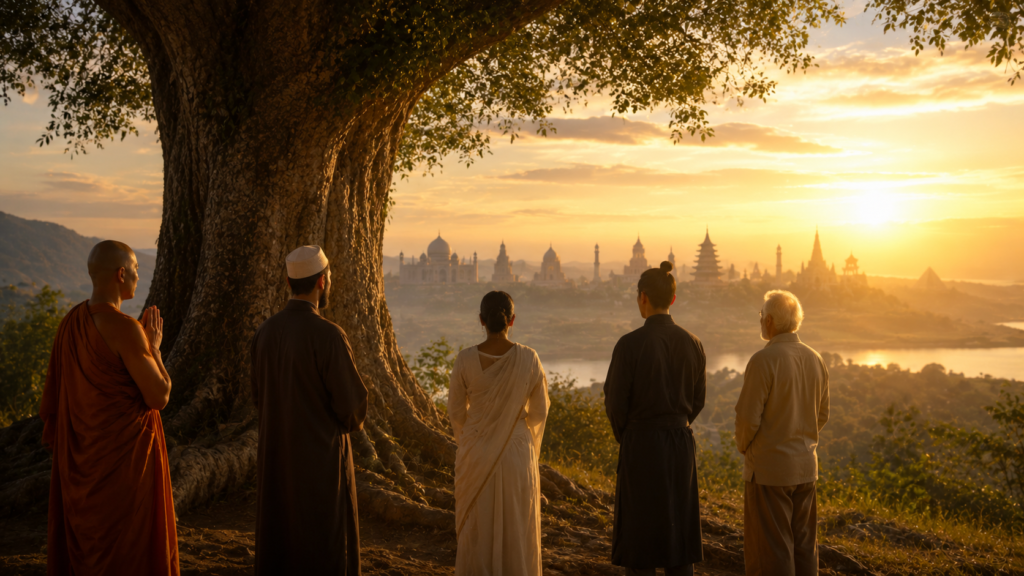
Religious Perspectives on Life After Death
Throughout history, religions have offered answers to questions that science cannot currently resolve. While beliefs differ, many religions teach that death is not necessarily the end of existence.
The following summaries describe major religious perspectives without suggesting that any one view is scientifically proven or universally accepted.
Christianity
Most Christian traditions teach that physical death is followed by continued existence of the soul. Beliefs generally include resurrection, final judgment, and eternal life with God for those who are saved.
Different Christian denominations interpret aspects of the afterlife differently, but hope, resurrection, and eternal life are central themes.
Islam
Islam teaches that earthly life is a temporary stage before the afterlife.
According to Islamic belief, individuals are accountable for their actions and will face judgment by God. Paradise and Hell are described as the ultimate destinations based on divine justice and mercy.
The afterlife is considered a fundamental part of Islamic faith.
Hinduism
Hinduism teaches that the soul (Atman) is eternal.
Rather than experiencing a single earthly life, the soul is believed to pass through reincarnation, taking new forms according to the principle of karma, where actions influence future lives.
The ultimate goal is moksha, liberation from the cycle of birth and rebirth.
Buddhism
Although Buddhist traditions vary, many teach that life involves a continuous cycle of birth, death, and rebirth influenced by karma.
Rather than focusing on an eternal soul, Buddhism emphasizes overcoming suffering and achieving enlightenment.
The ultimate goal is Nirvana, a state that transcends the cycle of rebirth.
Judaism
Judaism includes a variety of perspectives regarding the afterlife.
While beliefs differ among Jewish traditions, many emphasize living a righteous and meaningful life in the present. Some traditions teach resurrection and a future world to come, while others place greater emphasis on ethical living rather than detailed descriptions of life after death.
💡 CurioReader Tip: Understanding different religious beliefs isn’t about deciding which is correct. It helps us appreciate the diversity of human cultures and the different ways people seek meaning and comfort.
📌 Quick Summary
- Most major religions teach that life continues in some form after physical death.
- Christianity and Islam emphasize resurrection, judgment, and eternal life.
- Hinduism teaches reincarnation and karma.
- Buddhism focuses on rebirth, enlightenment, and Nirvana.
- Judaism includes diverse perspectives on the afterlife while emphasizing ethical living.
Why Humans Wonder About Death
Death is not only a biological event—it is also a deeply psychological one.
Humans possess a unique ability to think about the future, reflect on the past, and imagine possibilities beyond direct experience. This allows us to ask questions that other known species cannot answer.
Psychologists suggest several reasons why people naturally wonder about death.
Fear of the Unknown
Uncertainty often creates anxiety. Because no living person can provide complete certainty about what happens after permanent death, curiosity and fear naturally arise.
Search for Meaning
Many people seek purpose in life, and thoughts about death often encourage reflection on values, relationships, achievements, and legacy.
Love and Loss
The death of family members or friends often leads people to ask whether relationships continue in some way beyond physical life.
These questions can become part of the grieving process.
Cultural Influence
Our beliefs about death are often shaped by family traditions, religious teachings, education, and cultural values.
Different societies emphasize different explanations, but nearly all cultures develop rituals that help people process loss and remember loved ones.
🧠 Did You Know? Archaeologists have discovered ancient burial sites containing flowers, tools, ornaments, and personal belongings, suggesting that humans have been reflecting on death and possible afterlife beliefs for tens of thousands of years.

Common Myths About Death
Myth 1: Science Has Proven What Happens After Death
Science has explained many biological processes associated with death, but it has not established what happens to consciousness after permanent death.
Myth 2: Near-Death Experiences Prove an Afterlife
Near-death experiences are genuine reports from people who survived life-threatening situations. However, they are not considered conclusive scientific evidence for or against an afterlife.
Myth 3: All Religions Teach the Same Thing
Many religions share themes such as hope, morality, or continued existence, but their beliefs about the afterlife differ significantly.
Myth 4: Nobody Knows Anything About Death
Although important questions remain unanswered, medicine, neuroscience, psychology, and philosophy have greatly improved our understanding of the biological and emotional aspects of dying.
⚠️ Common Misconception: Uncertainty does not mean ignorance. It means recognizing the difference between what current evidence supports and what remains a matter of belief or philosophical interpretation.
Frequently Asked Questions
Has anyone scientifically proven an afterlife?
No. At present, there is no scientific evidence that conclusively proves or disproves the existence of an afterlife.
What is the difference between clinical death and brain death?
Clinical death refers to the stopping of heartbeat and breathing, while brain death is the irreversible loss of all brain function. Brain death is legally recognized as death in many countries.
Why do near-death experiences seem so similar?
Researchers continue to study this question. Possible explanations include changes in brain function, reduced oxygen, brain chemistry, and psychological factors, but no single explanation accounts for every reported experience.
Why do religions have different beliefs about death?
Religious beliefs developed across different cultures, historical periods, and spiritual traditions. Each offers its own understanding of life, death, and what may come afterward.
Key Takeaways
Death remains one of humanity’s greatest mysteries.
What we know today includes:
- Science explains many biological processes involved in dying.
- Consciousness appears closely connected to brain function, although important questions remain.
- Philosophy explores death through reason and critical thinking.
- Religions provide diverse beliefs based on faith and sacred traditions.
- Curiosity about death reflects humanity’s search for meaning, purpose, and understanding.
🌟 CurioReader Insight: One of the most honest answers to the question “What happens after death?” is that different disciplines offer different perspectives, and some aspects remain unknown. Understanding these perspectives helps us appreciate both the limits of current knowledge and the richness of human thought.
Conclusion
The question of what happens after death has inspired scientific investigation, philosophical reflection, and religious belief for thousands of years. Despite remarkable advances in medicine and neuroscience, some aspects of death—particularly the nature of consciousness beyond biological life—remain unanswered by current scientific evidence.
Rather than viewing these different perspectives as competing, they can be seen as complementary ways of exploring one of humanity’s oldest questions. Science helps us understand the physical process of dying, philosophy encourages thoughtful reflection on meaning and existence, and religion offers spiritual answers rooted in faith and tradition.
Whether a person approaches this subject through evidence, belief, personal experience, or curiosity, one truth remains universal: awareness of mortality often inspires people to value relationships, pursue meaningful goals, and appreciate the time they have.
Perhaps the most enduring lesson is not simply to ask what happens after death, but also to consider how we choose to live before it.
🚀 Think About This: While no one can answer every question about death with certainty, each of us can decide how we spend the time we have—by learning, building meaningful relationships, showing compassion, and leaving a positive impact on others.
Further Reading & Resources
Continue your learning journey with more expert guides and insightful articles from CurioReader. Explore related topics below to deepen your understanding and discover new perspectives.
Related CurioReader Articles
Recommended External Resources