Introduction
Education Systems Around the World. Education is one of the most powerful forces shaping individuals, communities, and nations. It equips people with knowledge, develops critical thinking, builds practical skills, and prepares future generations to contribute to society. Beyond classrooms and examinations, education influences economic growth, technological innovation, social equality, and cultural identity.
Although the goal of education is broadly similar around the world—to help people learn and reach their potential—the way countries achieve this goal varies significantly. Every education system reflects the history, culture, economy, political structure, and values of the society it serves. As a result, students in different parts of the world may experience very different classrooms, teaching methods, assessment styles, and learning environments.
For example, some countries emphasize academic excellence through rigorous examinations, while others focus on creativity, collaboration, and student well-being. Some systems encourage structured, teacher-led instruction, whereas others promote inquiry, discussion, and independent learning. None of these approaches is universally perfect; each has strengths, limitations, and lessons that others can learn from.
In recent decades, globalization has brought education systems closer together. International assessments, student exchange programs, digital learning platforms, and advances in technology have encouraged countries to study successful practices from around the world. Governments increasingly examine international evidence when reforming curricula, improving teacher training, or investing in educational technology.
The COVID-19 pandemic further highlighted the importance of resilient education systems. Schools across the globe rapidly adopted online learning, exposing both the opportunities and challenges of digital education. Since then, many countries have continued integrating technology, artificial intelligence, and personalized learning into their classrooms.
This article explores how education systems differ across the world’s major regions—Asia, Europe, North America, Oceania, Africa, and South America. Rather than identifying a single “best” education system, it examines the unique characteristics, strengths, and challenges of each region while highlighting what countries can learn from one another.
Whether you are a student, parent, educator, policymaker, or simply curious about global education, understanding these differences provides valuable insight into how societies prepare young people for an increasingly interconnected world.
CurioReader Insight: The world’s highest-performing education systems are not identical. Countries achieve success through different combinations of strong teachers, effective curricula, supportive learning environments, and policies that reflect their unique cultures and priorities.
Why Compare Education Systems?
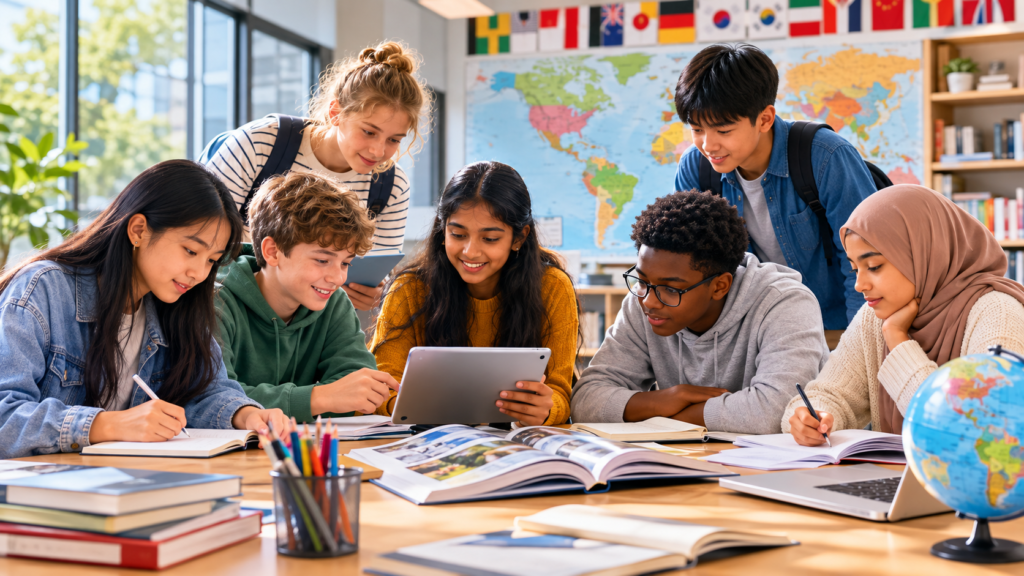
Comparing education systems is about far more than ranking countries by examination scores. It is an opportunity to understand how different societies approach learning and how those approaches influence students’ academic achievement, creativity, well-being, and future opportunities.
No education system exists in isolation. Nations regularly observe international trends, exchange research, and adopt successful ideas from abroad. Finland’s emphasis on student well-being, Singapore’s strong mathematics curriculum, New Zealand’s inquiry-based learning, and Germany’s vocational education system have all inspired educational reforms in other countries.
By comparing different approaches, we can better understand questions such as:
- Why do some countries consistently perform well in mathematics and science?
- How do teaching methods influence student engagement?
- What role should examinations play in education?
- How important are creativity and critical thinking?
- How can schools better prepare students for careers that may not yet exist?
These comparisons help educators and policymakers identify practices that may improve learning outcomes while recognizing that every solution must be adapted to local circumstances.
Why There Is No Single “Best” Education System
International rankings often generate headlines about the world’s “best” schools, but education is far too complex to measure using a single indicator.
A country with excellent standardized test scores may also face challenges such as high academic pressure or unequal access to educational opportunities. Another country may prioritize student happiness, creativity, or practical skills even if examination results are less competitive.
A truly successful education system balances multiple objectives, including:
- Academic achievement.
- Critical thinking.
- Creativity and innovation.
- Emotional well-being.
- Equal access to education.
- Digital literacy.
- Career readiness.
- Lifelong learning.
Different societies naturally place different levels of importance on each of these goals.
Did You Know? More than 250 million children and young people worldwide are estimated to be out of school, highlighting that improving access to quality education remains one of the world’s greatest challenges.
What Makes a Strong Education System?
Although countries organize education differently, researchers generally evaluate education systems using several common factors.
Understanding these criteria makes it easier to compare different regions fairly.
Academic Achievement
Academic performance remains one of the most visible measures of educational success.
Researchers often examine student performance in subjects such as:
- Mathematics.
- Science.
- Reading.
- Writing.
- Problem-solving.
International studies provide useful information about how students perform across different education systems.
However, examination scores represent only one aspect of educational quality.
Teacher Quality
Teachers are often considered the most important factor influencing student learning within schools.
Strong education systems typically invest heavily in:
- Teacher education.
- Professional development.
- Competitive recruitment.
- Classroom resources.
- Ongoing training.
Countries that value teaching as a respected profession often experience stronger educational outcomes over time.
Student Well-Being
Education is not only about academic success.
Healthy learning environments also support students’ physical, emotional, and social development.
Many modern education systems now place greater emphasis on:
- Mental health.
- Safe classrooms.
- Anti-bullying policies.
- Inclusive education.
- Physical activity.
- Healthy relationships.
Students generally learn more effectively when they feel safe, supported, and motivated.
Creativity and Critical Thinking
Today’s rapidly changing world requires more than memorizing information.
Many employers increasingly value skills such as:
- Critical thinking.
- Communication.
- Collaboration.
- Creativity.
- Adaptability.
- Digital problem-solving.
As a result, many countries are redesigning curricula to encourage deeper understanding rather than simple memorization.
Technology Integration
Technology has become an essential part of modern education.
Many schools now incorporate:
- Interactive whiteboards.
- Tablets and laptops.
- Online learning platforms.
- Artificial intelligence tools.
- Coding education.
- Virtual laboratories.
Effective technology integration depends not only on access to devices but also on teacher training and thoughtful classroom implementation.
Equity and Accessibility
A strong education system should provide opportunities for all learners regardless of background.
This includes supporting students from different:
- Economic circumstances.
- Geographic locations.
- Cultural communities.
- Languages.
- Learning abilities.
Improving educational equity remains a major goal in many countries around the world.
Education Spotlight: Many of the world’s highest-performing education systems combine academic excellence with strong teacher preparation, equitable access, and a commitment to continuous improvement. Success rarely depends on a single policy but on many interconnected factors working together.
How This Comparison Is Organized
Because every country has its own educational policies and traditions, comparing every national education system individually would be impossible within a single article.
Instead, this guide examines broad regional trends while highlighting notable countries that illustrate different educational approaches.
The regions covered are:
- Asia
- Europe
- North America
- Oceania
- Africa
- South America
Within these sections, selected countries are used as case studies to demonstrate how different philosophies and policies shape education in practice.
For example:
- Singapore represents academic excellence and strong STEM education.
- Finland is widely recognized for student-centered learning.
- Canada demonstrates a flexible and inclusive education model.
- New Zealand emphasizes inquiry-based learning and student well-being.
- Sri Lanka provides an important example of free public education and high literacy despite limited resources.
- South Africa, Kenya, Brazil, and Chile illustrate both the progress and ongoing challenges experienced in developing education systems.
Rather than declaring winners and losers, the goal is to understand the strengths of each approach and identify valuable lessons that can support educational improvement worldwide.
Quick Summary
Before exploring each continent in detail, remember these key ideas:
- Every education system reflects the history, culture, and priorities of its society.
- There is no universally perfect model of education.
- Strong systems balance academic achievement, creativity, well-being, equity, and future readiness.
- International comparisons encourage countries to learn from one another rather than compete alone.
- Modern education increasingly focuses on preparing students for lifelong learning in a rapidly changing world.
Asia: A Tradition of Academic Excellence and Discipline
Asia is home to more than half of the world’s population and includes some of the highest-performing education systems globally. Although the continent is incredibly diverse in terms of language, culture, religion, and economic development, many Asian countries share a strong belief that education is one of the most important pathways to personal success and national progress.
Across much of Asia, education is viewed not only as a means of acquiring knowledge but also as a responsibility to family and society. Parents, teachers, and governments often place a high value on academic achievement, particularly in mathematics, science, and technology.
Countries such as Singapore, Japan, and South Korea consistently rank among the world’s top performers in international educational assessments. Meanwhile, countries like India and Sri Lanka demonstrate how education can drive national development despite serving very large or resource-constrained populations.
However, Asia’s success is accompanied by challenges, including intense academic competition, examination pressure, and concerns about student well-being in some education systems.
CurioReader Insight: Asia is not defined by a single education model. Instead, it contains a wide variety of systems that share a strong commitment to learning while reflecting each country’s unique history, culture, and national priorities.
Singapore: Small Nation, World-Class Education
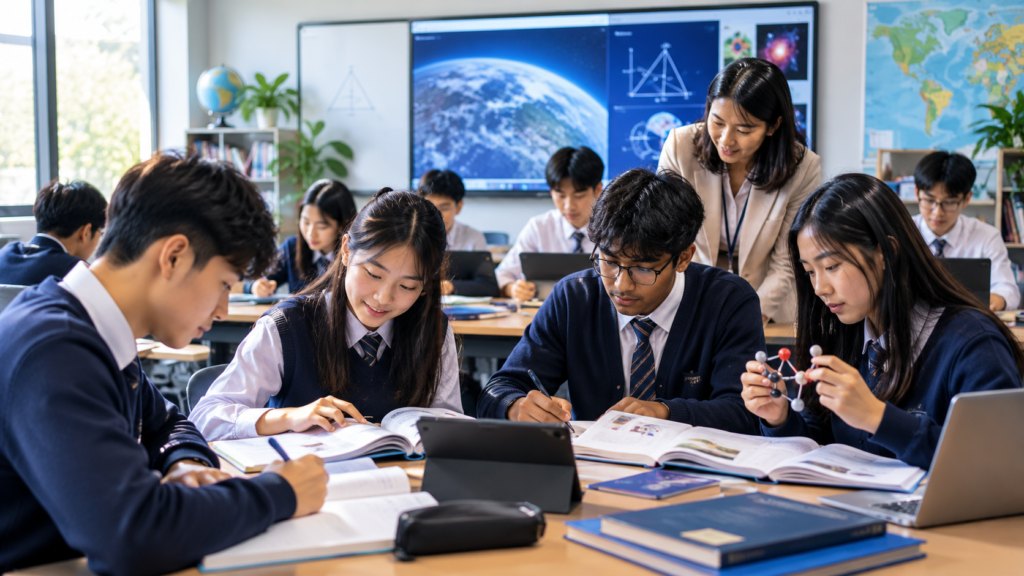
Singapore is frequently regarded as one of the world’s leading education systems.
Despite its relatively small size, the country consistently achieves outstanding results in international assessments of mathematics, science, and reading.
Singapore’s success is built upon several key principles:
- Highly qualified teachers.
- A carefully designed national curriculum.
- Strong government investment.
- Continuous educational improvement.
- High expectations for students.
Rather than simply encouraging memorization, Singapore increasingly emphasizes:
- Critical thinking.
- Problem-solving.
- Creativity.
- Collaboration.
- Digital literacy.
Teacher preparation is also exceptionally rigorous.
Only high-performing candidates are admitted into teacher training programs, and educators receive continuous professional development throughout their careers.
Singapore has also embraced educational technology, integrating digital learning into classrooms while preparing students for careers in science, engineering, and emerging technologies.
Strengths
- Outstanding mathematics and science education.
- Excellent teacher training.
- Strong STEM focus.
- Consistently high international rankings.
- Effective use of educational technology.
Challenges
- Competitive learning environment.
- Examination pressure.
- Maintaining student well-being alongside academic excellence.
Japan: Building Character Alongside Knowledge
Japan’s education system is widely respected for combining strong academic standards with character development.
Japanese schools aim not only to teach academic subjects but also to develop responsibility, cooperation, respect, and self-discipline.
Students often participate in activities beyond traditional classroom learning, including:
- Cleaning their classrooms.
- Serving school lunches.
- Working collaboratively.
- Participating in clubs.
- Community activities.
These responsibilities encourage independence and teamwork from an early age.
Academic standards remain high, particularly in mathematics and science.
However, equal importance is placed on developing respectful behavior and social responsibility.
Technology continues to play a growing role in Japanese education while preserving many long-standing traditions.
Strengths
- Strong discipline.
- Character education.
- Excellent mathematics and science.
- High student responsibility.
- Respectful classroom culture.
Challenges
- Academic competition.
- Long study hours.
- Balancing innovation with traditional educational practices.
Historical Perspective: Following the Second World War, Japan invested heavily in rebuilding its education system as part of its national recovery. Over the following decades, education became one of the foundations of the country’s remarkable economic and technological development.
South Korea: Excellence Through Dedication
South Korea is another country recognized internationally for its educational achievements.
Education is deeply valued by families, and many students dedicate significant time to academic study.
The school day is often followed by additional learning through private tutoring centers, commonly known as hagwons.
These supplementary classes aim to strengthen understanding of subjects such as:
- Mathematics.
- Science.
- English.
- University entrance preparation.
South Korea has developed a highly educated workforce that has contributed significantly to the country’s rapid economic growth and technological leadership.
However, this success has also sparked national discussions about reducing excessive academic pressure and promoting healthier work-life balance for students.
Strengths
- Outstanding academic performance.
- Strong STEM education.
- Highly motivated students.
- Excellent digital infrastructure.
- High university participation.
Challenges
- Examination stress.
- Long study hours.
- Heavy reliance on private tutoring.
- Mental health concerns among students.
Did You Know? South Korea has one of the highest rates of internet connectivity in the world, allowing many schools to integrate advanced digital learning technologies into everyday education.
India: Educating One of the World’s Largest Student Populations
India operates one of the largest education systems on Earth, serving hundreds of millions of students across thousands of schools and universities.
The country’s diversity presents unique opportunities and challenges.
Education policies must accommodate:
- Multiple languages.
- Different cultural traditions.
- Urban and rural communities.
- Wide economic differences.
India has produced internationally respected professionals in fields including:
- Engineering.
- Medicine.
- Information technology.
- Scientific research.
- Business.
Prestigious institutions such as the Indian Institutes of Technology (IITs) and the Indian Institutes of Management (IIMs) are recognized globally for academic excellence.
The government continues investing in digital education, teacher development, and expanding educational access, particularly in rural areas.
Strengths
- Large higher education sector.
- Strong engineering and technology education.
- Growing digital learning initiatives.
- Globally recognized universities.
- Expanding educational opportunities.
Challenges
- Educational inequality.
- Large class sizes in some regions.
- Infrastructure differences between urban and rural schools.
- Teacher shortages in certain areas.
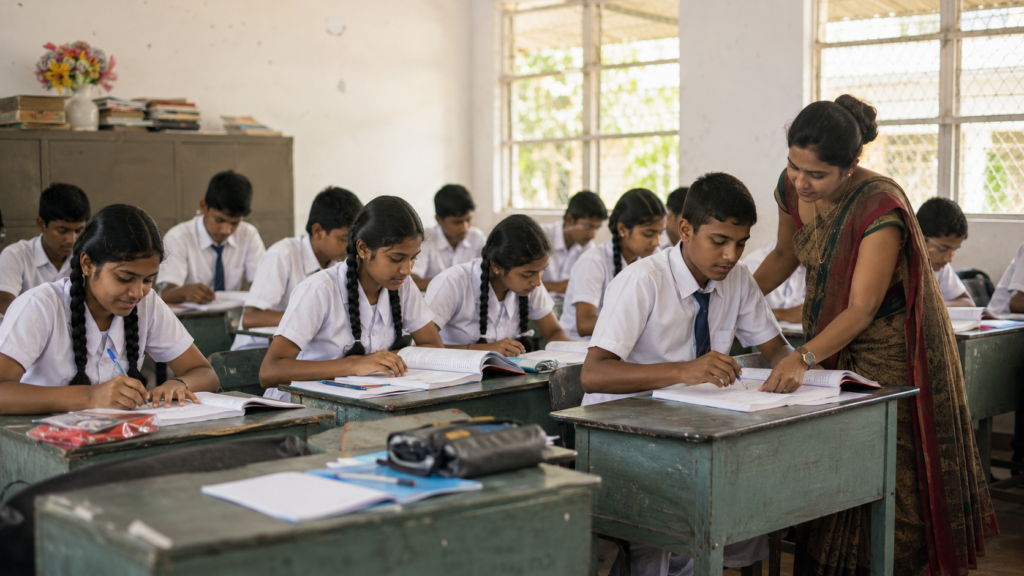
Sri Lanka: Free Education and High Literacy
Sri Lanka provides one of the most interesting education models in South Asia.
Despite being a developing country with limited financial resources, Sri Lanka has achieved a literacy rate that is high by regional standards, supported by its long-standing commitment to free public education.
A major turning point came in 1945, when the country introduced a policy of free education that opened educational opportunities to students from a wide range of social and economic backgrounds.
Today, government schools educate the majority of Sri Lankan students, while public universities continue offering tuition-free higher education for students who meet academic entry requirements.
The education system follows several major stages:
- Primary education.
- Junior secondary education.
- Senior secondary education.
- University education.
Students typically complete two nationally significant examinations:
- General Certificate of Education Ordinary Level (G.C.E. O/L).
- General Certificate of Education Advanced Level (G.C.E. A/L).
Performance in the Advanced Level examination largely determines admission to state universities, making it one of the most competitive stages of a student’s academic journey.
Another distinctive feature is the Grade 5 Scholarship Examination, which provides opportunities for academically talented students to enter leading national schools.
Outside formal schooling, private tuition classes are common and play an important role in examination preparation for many students.
Sri Lanka has also expanded information technology education and English-language instruction in recent years as part of broader educational modernization efforts.
Strengths
- Free education from primary school through many university programs.
- High literacy rate.
- Strong public school network.
- Well-established national examination system.
- High social value placed on education.
Challenges
- Intense competition for university admission.
- Examination-centered learning.
- Unequal access to resources between schools.
- Need for greater emphasis on critical thinking, creativity, and digital skills.
- Continued investment in educational technology and teacher development.
Education Spotlight: Sri Lanka demonstrates that long-term public investment in education can significantly improve literacy and educational access, even in a country with limited economic resources. Its experience highlights both the achievements and continuing challenges of maintaining quality, equity, and innovation within a free public education system.
Common Characteristics of Many Asian Education Systems
Although educational approaches differ across Asia, several broad characteristics appear in many countries.
These include:
- Strong respect for teachers and education.
- High academic expectations.
- Significant emphasis on mathematics and science.
- Structured classroom environments.
- Competitive entrance examinations.
- Active parental involvement.
- Growing investment in digital learning.
- Increasing focus on preparing students for technology-driven economies.
At the same time, many governments are introducing reforms that encourage:
- Creativity.
- Critical thinking.
- Communication skills.
- Student well-being.
- Project-based learning.
- Innovation.
These changes reflect recognition that success in the twenty-first century requires more than examination performance alone.
Asia Education Snapshot
Focus: Academic excellence, discipline, and strong foundational knowledge.
Key Strengths
- Outstanding STEM performance.
- Highly respected teaching profession.
- Strong work ethic.
- Significant parental support.
- Continuous educational improvement.
Common Challenges
- Examination pressure.
- Student stress.
- Balancing academic success with creativity.
- Educational inequality in some regions.
- Preparing students for rapidly changing future careers.
Quick Summary
Asia’s education systems demonstrate how strong investment in teachers, structured curricula, and high academic expectations can produce excellent learning outcomes. Countries such as Singapore, Japan, South Korea, India, and Sri Lanka each illustrate different approaches to educational success, while also highlighting the importance of adapting education to changing economic and social needs.
Europe: Fostering Creativity, Independence, and Lifelong Learning
Europe is home to some of the world’s most respected education systems. Although each country has its own curriculum, language, and educational policies, many European nations share a common goal: developing well-rounded individuals who are not only academically capable but also creative, independent, and prepared for lifelong learning.
Unlike the common perception that educational success depends solely on examinations, many European countries place significant emphasis on developing practical skills, critical thinking, collaboration, and student well-being.
European education has also played a major role in shaping modern educational philosophy. Concepts such as compulsory education, vocational training, student-centered learning, and lifelong education have influenced school systems around the world.
Countries including Finland, Estonia, Germany, the Netherlands, and the United Kingdom each demonstrate different approaches to educational excellence while reflecting their own histories and cultural values.
CurioReader Insight: Europe’s strongest education systems are not successful because they all follow the same model. Instead, they continuously improve by balancing academic achievement with creativity, inclusion, innovation, and student well-being.
Finland: Learning Without Excessive Pressure
Finland is frequently recognized as one of the world’s most admired education systems.
Interestingly, Finland achieves excellent educational outcomes without relying on frequent standardized testing or excessive homework.
Instead, Finnish education is built upon trust, equality, and professional teaching.
Teachers enjoy significant autonomy in planning lessons while following national curriculum guidelines.
Students experience:
- Smaller amounts of homework.
- Less examination pressure.
- More classroom discussion.
- Practical learning.
- Individual support.
- Strong emphasis on reading.
Children generally begin formal schooling slightly later than in many other countries, allowing greater focus on early childhood development before academic instruction becomes more structured.
Rather than encouraging competition between schools, Finland seeks to provide high-quality education for every child regardless of family background or location.
Strengths
- Student-centered learning.
- Highly qualified teachers.
- Strong reading culture.
- Excellent educational equality.
- Low academic stress.
- High student well-being.
Challenges
- Maintaining high standards in an increasingly digital world.
- Supporting growing cultural diversity.
- Addressing teacher shortages in some regions.
Did You Know? Teaching is one of Finland’s most respected professions. Becoming a teacher is highly competitive, and most teachers complete a master’s degree before entering the classroom.
Estonia: A Digital Education Success Story
Although Estonia is a relatively small country, it has become one of Europe’s strongest performers in international education.
Following independence in the early 1990s, Estonia invested heavily in digital infrastructure and educational modernization.
Today, technology plays an important role throughout its education system.
Students regularly use:
- Digital learning platforms.
- Online resources.
- Coding activities.
- Interactive classrooms.
- Educational software.
At the same time, Estonia maintains high academic standards in mathematics, science, and reading.
Its success demonstrates that relatively small countries can achieve remarkable educational outcomes through thoughtful long-term planning and investment.
Strengths
- Strong digital education.
- Excellent STEM performance.
- Modern curriculum.
- High educational efficiency.
- Continuous innovation.
Challenges
- Keeping pace with rapidly evolving technologies.
- Supporting rural communities.
- Maintaining teacher recruitment.
Germany: Academic and Vocational Excellence
Germany offers one of the world’s most respected examples of vocational education.
Unlike many countries that primarily prepare students for university, Germany recognizes that different learners have different strengths and career goals.
After completing lower secondary education, students may follow different educational pathways depending on their interests and abilities.
These pathways include:
- Academic secondary education.
- Technical education.
- Vocational education and training (VET).
One of Germany’s most successful innovations is the dual education system.
Students divide their time between:
- Classroom learning.
- Practical workplace training.
This approach allows learners to develop both theoretical knowledge and real-world experience before entering the workforce.
Germany’s vocational system has helped produce highly skilled workers in industries including:
- Engineering.
- Manufacturing.
- Information technology.
- Healthcare.
- Skilled trades.
Strengths
- Outstanding vocational education.
- Strong industry partnerships.
- Practical workplace experience.
- Low youth unemployment.
- Excellent technical training.
Challenges
- Integrating digital skills across all sectors.
- Addressing regional educational differences.
- Supporting increasingly diverse student populations.
Education Spotlight: Germany’s dual education model is often studied by other countries because it successfully connects schools, employers, and vocational institutions, helping students transition smoothly from education into employment.
The Netherlands: Encouraging Independent Learners
The Netherlands consistently performs well in international educational assessments while maintaining a flexible and student-focused learning environment.
Dutch education encourages students to:
- Ask questions.
- Express opinions.
- Work collaboratively.
- Solve problems independently.
- Participate actively in discussions.
Teachers often serve as facilitators who guide learning rather than simply delivering information through lectures.
Digital technologies are widely integrated into classrooms, and schools place increasing emphasis on preparing students for future careers requiring creativity, communication, and adaptability.
Students are encouraged to become responsible learners who can think independently rather than relying solely on memorization.
Strengths
- Interactive classrooms.
- Strong critical thinking.
- Student participation.
- Flexible curriculum.
- Modern teaching methods.
Challenges
- Managing educational diversity.
- Balancing flexibility with academic consistency.
- Responding to changing workforce needs.
United Kingdom: Tradition Meets Innovation
The United Kingdom has one of the world’s oldest and most influential education systems.
Its universities—including institutions with centuries of history—have contributed significantly to global research, science, literature, and innovation.
School education across England, Scotland, Wales, and Northern Ireland differs in certain respects, but several common features include:
- Structured national curricula.
- Regular assessment.
- Broad subject choices.
- Strong extracurricular opportunities.
- Growing emphasis on digital learning.
British schools increasingly encourage students to develop:
- Critical thinking.
- Communication.
- Research skills.
- Creativity.
- Independent learning.
Many schools also offer a wide variety of extracurricular activities such as music, sports, debating, drama, and community service, supporting students’ personal development alongside academic achievement.
Strengths
- World-renowned universities.
- Strong research culture.
- Broad curriculum.
- Excellent extracurricular opportunities.
- International educational reputation.
Challenges
- Educational inequality in some communities.
- Examination pressure at key stages.
- Teacher workload.
- Ensuring equal access to high-quality education.
Historical Perspective: Many educational practices used around the world—including compulsory schooling, teacher training institutions, and modern universities—have been influenced by European educational traditions developed over several centuries.
Common Characteristics of Many European Education Systems
Although Europe contains many different national education systems, several broad themes appear across the region.
These include:
- Student-centered learning.
- Strong teacher professionalism.
- Critical thinking.
- Classroom discussion.
- Project-based learning.
- Educational inclusion.
- Lifelong learning.
- Balanced academic and personal development.
Many European countries also place considerable importance on helping students become responsible citizens who contribute positively to society.
Increasingly, schools encourage learners to understand global issues such as:
- Climate change.
- Digital citizenship.
- Cultural diversity.
- Sustainable development.
- Media literacy.
This reflects the belief that education should prepare students not only for employment but also for active participation in modern democratic societies.
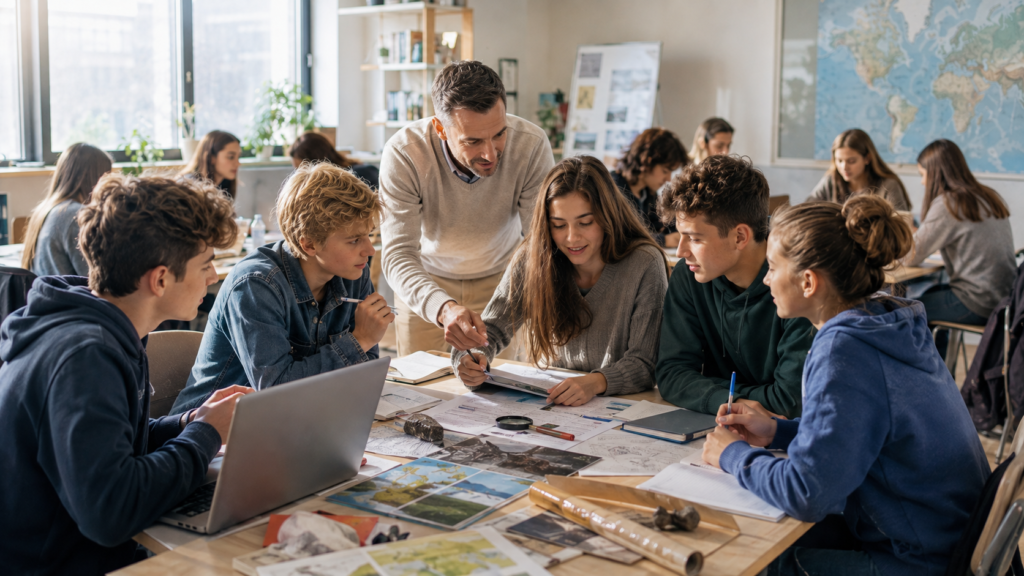
Europe Education Snapshot
Focus: Creativity, critical thinking, equality, and lifelong learning.
Key Strengths
- Highly qualified teachers.
- Student-centered classrooms.
- Strong reading culture.
- Vocational education.
- Educational innovation.
- Digital learning.
Common Challenges
- Teacher shortages in some regions.
- Educational inequality.
- Adapting to technological change.
- Supporting increasingly diverse student populations.
- Balancing academic standards with student well-being.
Asia and Europe: Different Paths to Educational Success
Although Asia and Europe often appear together in international education discussions, they generally emphasize different educational philosophies.
Broadly speaking:
Many Asian systems prioritize:
- Academic excellence.
- Discipline.
- Structured learning.
- Examination performance.
- Strong mathematics and science foundations.
Many European systems place greater emphasis on:
- Independent thinking.
- Creativity.
- Collaboration.
- Student well-being.
- Flexible learning pathways.
Neither approach is inherently superior.
In fact, many countries are gradually combining elements of both philosophies.
Asian education systems increasingly encourage creativity and innovation, while European systems continue strengthening STEM education and academic rigor.
The future of education is therefore likely to involve learning from successful practices around the world rather than choosing one educational philosophy over another.
Quick Summary
Europe demonstrates that educational success can be achieved through student-centered learning, highly trained teachers, creativity, vocational education, and strong support for lifelong learning. Countries such as Finland, Estonia, Germany, the Netherlands, and the United Kingdom each contribute valuable ideas that continue to influence education globally.
North America: Flexibility, Innovation, and Diverse Learning Opportunities
North America is home to two of the world’s most influential education systems—the United States and Canada. While both countries share certain educational characteristics, each has developed its own approach to preparing students for higher education, employment, and active citizenship.
Unlike education systems that rely heavily on centralized national curricula, schools in North America often enjoy considerable flexibility. State, provincial, and local authorities frequently play an important role in curriculum development, allowing schools to adapt learning to regional needs and student interests.
One defining characteristic of North American education is its emphasis on developing the whole student. Academic achievement remains important, but schools also encourage creativity, leadership, communication, teamwork, and participation in extracurricular activities.
CurioReader Insight: North American education generally views learning as extending beyond the classroom. Sports, music, arts, volunteering, and leadership programs are often considered valuable parts of a student’s overall development.
United States: Flexibility and Broad Learning Opportunities
The United States operates one of the world’s largest and most diverse education systems.
Because education is largely managed at the state and local levels, schools can differ considerably in curriculum, graduation requirements, and teaching approaches.
Students often study a broad range of subjects, including:
- Mathematics
- Science
- English
- History
- Arts
- Physical education
- Technology
- Foreign languages
As students progress through secondary school, they frequently have opportunities to select elective courses that match their interests and future career goals.
Examples include:
- Computer programming
- Graphic design
- Business studies
- Engineering
- Psychology
- Performing arts
- Environmental science
Project-based learning, classroom discussions, presentations, and collaborative assignments are commonly used alongside traditional examinations.
American schools also place considerable emphasis on extracurricular activities.
Students may participate in:
- Sports teams
- Music and bands
- Debate clubs
- Robotics competitions
- Student government
- Community service
- Entrepreneurship programs
These experiences help students develop leadership, teamwork, and communication skills beyond academic learning.
Strengths
- Flexible curriculum.
- Wide subject choices.
- Strong university system.
- Excellent research opportunities.
- Rich extracurricular programs.
- Innovation and entrepreneurship.
Challenges
- Educational inequality between regions.
- Funding differences among school districts.
- Rising higher education costs.
- Achievement gaps among different communities.
Canada: Inclusive and Student-Centered Education
Canada consistently ranks among the world’s strongest education systems.
Although each province manages its own schools, several common characteristics appear across the country.
Canadian education emphasizes:
- Inclusion.
- Critical thinking.
- Collaboration.
- Respect for diversity.
- Student well-being.
- Lifelong learning.
Teachers encourage active participation rather than passive memorization.
Students regularly engage in:
- Group projects.
- Classroom discussions.
- Research assignments.
- Presentations.
- Inquiry-based learning.
Canada is also recognized internationally for welcoming students from many cultural and linguistic backgrounds.
Many schools actively support multicultural education while encouraging respect for Indigenous cultures and perspectives.
Technology plays an increasingly important role, with digital learning integrated into classrooms across much of the country.
Strengths
- Inclusive learning environments.
- High academic performance.
- Strong reading and literacy outcomes.
- Multicultural education.
- Student well-being.
- Excellent public education system.
Challenges
- Geographic differences in educational access.
- Teacher shortages in remote communities.
- Supporting rapidly growing student populations in some regions.
Education Spotlight: Canada consistently performs well in international education assessments while maintaining one of the world’s most inclusive public education systems. Its success demonstrates that educational excellence and diversity can develop together.
Oceania: Preparing Students for a Changing World
Although Oceania contains many island nations, Australia and New Zealand have the region’s largest and most internationally recognized education systems.
Both countries emphasize preparing students for lifelong learning rather than simply achieving high examination scores.
Their curricula increasingly encourage:
- Critical thinking.
- Creativity.
- Collaboration.
- Digital literacy.
- Environmental awareness.
- Cultural understanding.
Schools often combine classroom learning with practical experiences that connect education to everyday life.
Australia: Balancing Academic Achievement and Practical Skills
Australia has developed a modern education system that combines academic learning with practical skills and personal development.
The Australian Curriculum provides national learning goals while allowing flexibility for states and territories to address local priorities.
Students study a broad range of subjects, including:
- English.
- Mathematics.
- Science.
- Humanities.
- Technologies.
- Health and physical education.
- The Arts.
- Languages.
Australian schools increasingly use inquiry-based learning, encouraging students to investigate real-world problems and develop independent solutions.
Outdoor education also plays an important role in many schools, helping students develop environmental awareness, teamwork, and resilience.
Technology has become deeply integrated into classrooms, with growing emphasis on coding, digital citizenship, and responsible use of artificial intelligence.
Strengths
- Balanced curriculum.
- Strong focus on practical learning.
- Modern technology integration.
- Outdoor education.
- Student participation.
- High-quality universities.
Challenges
- Educational differences between urban and remote communities.
- Supporting Indigenous education.
- Teacher recruitment in rural areas.
- Managing rapid technological change.
New Zealand: Learning Through Inquiry and Well-Being
New Zealand is internationally recognized for its student-centered approach to education.
Rather than emphasizing memorization alone, New Zealand encourages learners to become curious, independent thinkers capable of solving problems creatively.
The New Zealand Curriculum places strong emphasis on developing key competencies such as:
- Thinking.
- Relating to others.
- Managing oneself.
- Participating and contributing.
- Using language, symbols, and texts.
Inquiry-based learning allows students to investigate meaningful questions while applying knowledge across different subjects.
Teachers often encourage learners to:
- Ask questions.
- Conduct research.
- Work collaboratively.
- Reflect on their learning.
- Connect classroom knowledge to everyday life.
Another distinctive feature is the recognition of Māori culture and language as an important part of national education.
Schools increasingly incorporate Māori perspectives, history, traditions, and values into classroom learning, supporting New Zealand’s bicultural identity.
Student well-being is another major priority.
Schools commonly promote:
- Positive relationships.
- Inclusive classrooms.
- Mental health support.
- Outdoor learning.
- Physical activity.
- Community engagement.
Assessment also differs from many examination-focused systems.
Senior secondary students typically work toward the National Certificate of Educational Achievement (NCEA), which combines internal assessments with external examinations and recognizes achievement across a broad range of learning experiences.
Strengths
- Inquiry-based learning.
- Student well-being.
- Critical thinking.
- Inclusive education.
- Recognition of Māori culture.
- Flexible assessment system.
Challenges
- Educational achievement gaps among different communities.
- Supporting rural schools.
- Ensuring equitable digital access.
- Preparing students for rapidly evolving careers.
Did You Know? New Zealand schools frequently incorporate outdoor learning experiences into the curriculum, reflecting the country’s strong connection to its natural environment and the belief that meaningful learning can occur beyond the classroom.
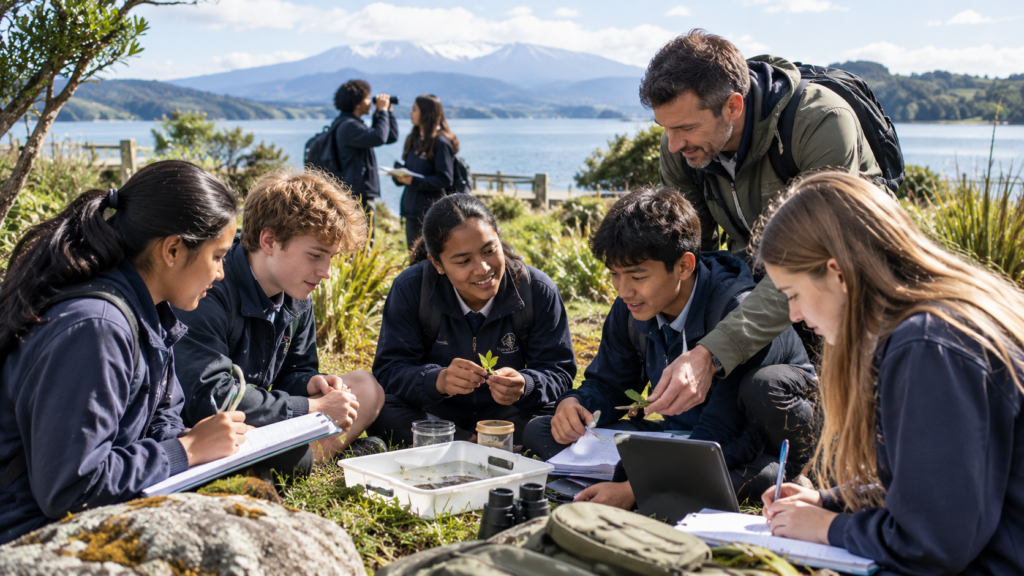
Common Characteristics of North American and Oceanian Education
Although North America and Oceania have developed independently, they share several educational priorities.
These include:
- Student-centered learning.
- Flexible curricula.
- Broad subject choices.
- Inquiry and project-based learning.
- Strong extracurricular opportunities.
- Digital literacy.
- Inclusive classrooms.
- Preparing students for lifelong learning.
Rather than focusing exclusively on examination performance, these education systems generally encourage students to develop transferable skills that remain valuable throughout their lives.
These include:
- Communication.
- Collaboration.
- Adaptability.
- Creativity.
- Leadership.
- Digital competence.
As technology continues transforming society, these skills are becoming increasingly important for future employment and citizenship.
North America & Oceania Education Snapshot
Focus: Flexible learning, innovation, student well-being, and future-ready skills.
Key Strengths
- Broad and flexible curricula.
- Strong critical thinking.
- Excellent extracurricular opportunities.
- Inclusive learning environments.
- Technology integration.
- Preparation for lifelong learning.
Common Challenges
- Educational inequality in some communities.
- Teacher shortages in rural and remote areas.
- Rising education costs in higher education.
- Rapid technological change.
- Ensuring equal opportunities for all learners.
Comparing Three Educational Philosophies
By this stage, three broad educational approaches have emerged.
Many Asian education systems often emphasize:
- Academic excellence.
- Discipline.
- Structured learning.
- Strong STEM foundations.
- Examination performance.
Many European education systems commonly prioritize:
- Creativity.
- Critical thinking.
- Student independence.
- Vocational education.
- Educational equality.
North American and Oceanian education systems generally focus on:
- Flexible learning.
- Student choice.
- Innovation.
- Well-being.
- Real-world application of knowledge.
- Personal development.
Increasingly, however, these distinctions are becoming less pronounced.
Countries around the world are borrowing successful ideas from one another. Asian systems are introducing more inquiry-based learning, while Western countries continue strengthening mathematics, science, and technology education.
This growing exchange of ideas reflects a shared understanding that preparing students for the future requires balancing academic knowledge with creativity, adaptability, and lifelong learning.
Quick Summary
North America and Oceania demonstrate that education can successfully combine academic learning with flexibility, innovation, and personal development. The United States, Canada, Australia, and New Zealand each provide valuable examples of student-centered education that prepares learners for a rapidly changing world while recognizing the importance of diversity, inclusion, and lifelong learning.
Africa: Expanding Access and Building the Future
Africa is home to the world’s youngest population, making education one of the continent’s most important priorities for future economic and social development. With 54 countries, thousands of languages, and diverse cultures, Africa’s education systems vary considerably. Some countries have made remarkable progress in expanding access to education, while others continue to address challenges such as infrastructure, teacher shortages, and educational inequality.
During the past few decades, many African governments have invested heavily in improving school enrollment, teacher training, curriculum development, and digital learning. International organizations, local communities, and private institutions have also contributed to expanding educational opportunities.
Although significant challenges remain, Africa’s education systems are evolving rapidly and demonstrate remarkable resilience and innovation.
CurioReader Insight: Africa’s education story is not simply about overcoming challenges. It is also about innovation, resilience, and the determination of governments, educators, and communities to provide better opportunities for future generations.
Kenya: Improving Access Through Educational Reform
Kenya has made significant progress in expanding access to education over the past two decades.
The introduction of free primary education greatly increased school enrollment and helped millions of children gain access to formal schooling.
More recently, Kenya introduced the Competency-Based Curriculum (CBC), which aims to move beyond memorization by developing practical skills, creativity, communication, and problem-solving.
Students are encouraged to build competencies such as:
- Critical thinking.
- Digital literacy.
- Creativity.
- Citizenship.
- Collaboration.
- Self-learning.
Technology is gradually becoming more integrated into classrooms, particularly in urban areas, while teacher training programs continue supporting curriculum reform.
Strengths
- Expanded access to education.
- Competency-based curriculum.
- Growing digital education.
- Increased focus on practical skills.
- Strong government commitment to reform.
Challenges
- Large class sizes in some schools.
- Infrastructure differences.
- Teacher shortages in rural regions.
- Unequal access to technology.
Rwanda: Rebuilding Education Through Innovation
Following the devastating events of the 1990s, Rwanda has invested heavily in rebuilding its education system.
Education has become a central part of the country’s long-term national development strategy.
Recent reforms have focused on:
- Teacher development.
- English-language education.
- Information technology.
- Science and innovation.
- Digital classrooms.
Rwanda has also introduced initiatives that improve internet access and encourage digital learning across schools.
The country increasingly emphasizes preparing students for participation in a knowledge-based economy.
Strengths
- Strong government investment.
- Growing digital infrastructure.
- Modern curriculum reforms.
- Increasing STEM education.
- Long-term educational planning.
Challenges
- Resource limitations.
- Rural connectivity.
- Teacher recruitment.
- Continued infrastructure development.
South Africa: Diversity and Opportunity
South Africa has one of Africa’s most developed higher education sectors and several internationally respected universities.
Its education system serves students from many different cultural, linguistic, and socioeconomic backgrounds.
Schools teach in multiple official languages, reflecting the country’s diversity.
Educational priorities include:
- Improving literacy.
- Expanding STEM education.
- Supporting digital learning.
- Increasing educational equity.
- Teacher development.
South Africa also continues working to reduce inequalities that developed during earlier historical periods.
Strengths
- Strong universities.
- Diverse curriculum.
- Expanding technology education.
- Research capability.
- Multicultural learning environment.
Challenges
- Educational inequality.
- Infrastructure differences.
- School funding variations.
- Teacher shortages in some communities.
Education Spotlight: Several African countries are using mobile technology and digital learning platforms to expand educational opportunities in remote communities where traditional resources may be limited.
South America: Reforming Education for Greater Equity
South America has made substantial progress in expanding educational access during recent decades.
Governments throughout the region have invested in:
- School enrollment.
- Teacher training.
- Curriculum modernization.
- Technology integration.
- Educational inclusion.
Many countries continue working to reduce inequality while improving learning outcomes.
Chile: High Standards and Continuous Improvement
Chile has introduced numerous educational reforms aimed at improving quality and increasing access.
The country has expanded higher education while strengthening teacher development and curriculum standards.
Schools increasingly encourage:
- Critical thinking.
- Problem-solving.
- Student participation.
- Technology use.
- Inclusive learning.
Chile continues refining its education system through ongoing evaluation and policy improvement.
Strengths
- Continuous educational reform.
- Strong higher education sector.
- Modern curriculum.
- Increasing digital learning.
- Teacher professional development.
Challenges
- Educational inequality.
- Regional differences.
- Access to quality education in some communities.
Brazil: Educating a Large and Diverse Population
Brazil operates one of the world’s largest education systems.
Serving millions of students across a vast geographical area presents significant challenges, but also opportunities for innovation.
Recent priorities include:
- Improving literacy.
- Expanding early childhood education.
- Teacher training.
- Technology integration.
- Increasing school attendance.
Digital education initiatives continue growing throughout the country, particularly following the expansion of online learning during recent years.
Strengths
- Large public education system.
- Expanding digital education.
- Curriculum modernization.
- Greater educational access.
- Diverse higher education opportunities.
Challenges
- Regional inequality.
- Infrastructure differences.
- Teacher shortages in some areas.
- Educational funding.
Argentina: A Strong Tradition of Public Education
Argentina has a long history of supporting public education and maintaining relatively high literacy rates within the region.
The country places considerable value on:
- Free public education.
- University access.
- Scientific research.
- Cultural education.
- Teacher preparation.
Schools increasingly incorporate digital learning while continuing efforts to improve educational quality across different provinces.
Strengths
- Strong public education tradition.
- High literacy.
- Accessible higher education.
- Cultural and scientific emphasis.
- Educational reform initiatives.
Challenges
- Economic pressures.
- Funding stability.
- Regional educational differences.
Did You Know? Several South American countries provide free or heavily subsidized university education through public institutions, helping expand access to higher education for many students.
Global Comparison of Education Systems
Although every country is unique, broad educational patterns can be observed across different regions.
| Feature | Asia | Europe | North America | Oceania | Africa | South America |
|---|---|---|---|---|---|---|
| Teaching Style | Structured | Student-centered | Flexible | Inquiry-based | Mixed | Reform-oriented |
| Academic Pressure | High | Moderate | Moderate | Moderate | Varies | Moderate |
| STEM Focus | Very Strong | Strong | Strong | Strong | Growing | Growing |
| Creativity | Increasing | Very Strong | Strong | Very Strong | Growing | Growing |
| Technology | Advanced | Advanced | Advanced | Advanced | Expanding | Expanding |
| Student Well-being | Increasing focus | High priority | High priority | Very High priority | Growing focus | Growing focus |
| Vocational Education | Moderate | Excellent | Moderate | Moderate | Developing | Developing |
Global Comparison: The comparison highlights broad regional trends rather than fixed rules. Every continent includes countries with unique educational philosophies, achievements, and challenges.
What Every Region Does Well
One of the most valuable lessons from studying global education is that every region has developed successful practices that others can learn from.
Asia
Well known for:
- Academic excellence.
- Strong mathematics and science education.
- Discipline.
- Respect for teachers.
- High educational expectations.
Europe
Recognized for:
- Critical thinking.
- Creativity.
- Vocational education.
- Educational equality.
- Lifelong learning.
North America
Strengths include:
- Flexible curricula.
- Innovation.
- Research.
- Extracurricular development.
- Leadership opportunities.
Oceania
Particularly valued for:
- Student well-being.
- Inquiry-based learning.
- Outdoor education.
- Cultural inclusion.
- Holistic development.
Africa
Increasingly recognized for:
- Educational resilience.
- Competency-based reforms.
- Expanding educational access.
- Community involvement.
- Growing digital innovation.
South America
Known for:
- Educational reform.
- Inclusive education.
- Public education traditions.
- Cultural diversity.
- Expanding higher education opportunities.
Historical Perspective: Throughout history, countries have continuously learned from one another. Many modern educational practices—including compulsory schooling, vocational training, inquiry-based learning, and digital education—have spread internationally through collaboration, research, and educational reform.
Quick Summary
Education systems across Africa and South America continue evolving through investment, innovation, and reform while addressing unique local challenges. Together with Asia, Europe, North America, and Oceania, these regions demonstrate that educational excellence can take many different forms. Rather than competing to create a single “best” system, countries increasingly benefit by learning from one another’s strengths and adapting successful ideas to their own cultural and national contexts.
The Future of Global Education
Education has continually evolved throughout history, adapting to new discoveries, technologies, and the changing needs of society. Today’s students are preparing for careers and challenges that may look very different from those of previous generations. As artificial intelligence, automation, climate change, globalization, and digital transformation reshape the world, education systems must also continue evolving.
The schools of the future will likely focus not only on teaching knowledge but also on helping students become adaptable, creative, ethical, and lifelong learners.
Rather than replacing traditional education, emerging technologies and innovative teaching methods are expected to complement the important role of teachers and schools.
CurioReader Insight: The most successful education systems of the future may not be those with the highest examination scores alone, but those that prepare students to think critically, adapt to change, collaborate globally, and continue learning throughout their lives.
Artificial Intelligence in Education
Artificial Intelligence (AI) is already transforming classrooms around the world.
Teachers increasingly use AI-powered tools to:
- Personalize learning.
- Generate lesson plans.
- Assess student progress.
- Identify learning gaps.
- Provide instant feedback.
- Support students with different learning needs.
Students can also benefit from AI by receiving individualized explanations, practicing difficult concepts, and accessing educational resources more efficiently.
However, AI should support—not replace—human thinking.
Schools must continue encouraging:
- Critical thinking.
- Independent problem-solving.
- Creativity.
- Ethical decision-making.
- Responsible technology use.
Teaching students how to use AI responsibly may become just as important as teaching traditional academic subjects.
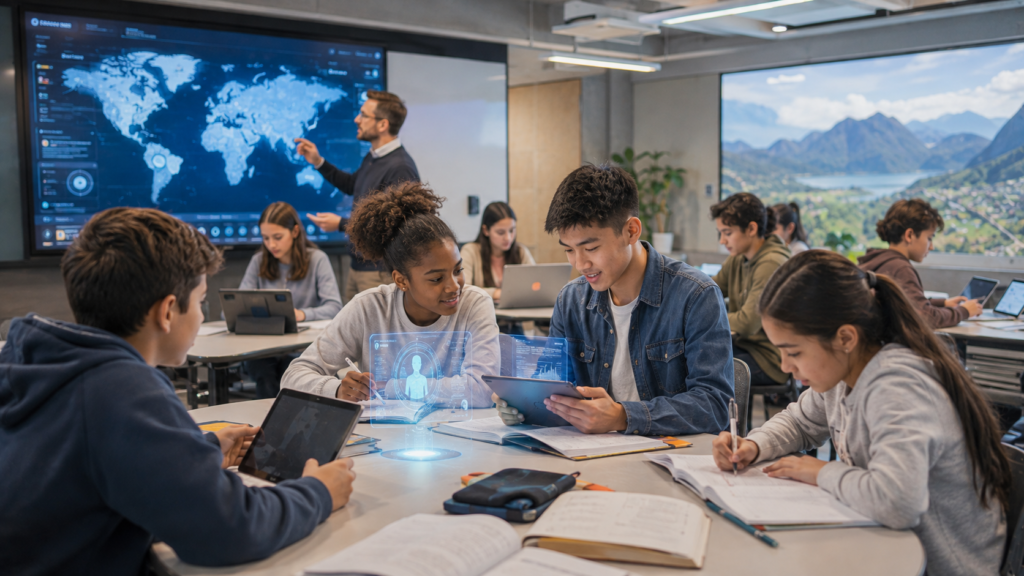
Personalized Learning
Traditional classrooms often teach every student at the same pace.
Future education may become increasingly personalized.
Using technology and continuous assessment, learning platforms can adapt lessons according to each student’s:
- Strengths.
- Interests.
- Learning speed.
- Previous knowledge.
- Areas requiring improvement.
This approach may help students remain engaged while allowing teachers to provide more targeted support.
Digital Literacy
Being able to use technology is no longer enough.
Students must also learn how to:
- Evaluate online information.
- Recognize misinformation.
- Protect personal privacy.
- Understand cybersecurity.
- Use digital tools responsibly.
- Communicate effectively online.
Digital literacy is becoming an essential life skill across every profession.
Lifelong Learning
Education no longer ends with graduation.
Rapid technological change means adults must continue learning throughout their careers.
Many governments, universities, and businesses now encourage lifelong learning through:
- Online courses.
- Professional certifications.
- Workplace training.
- Distance learning.
- Micro-credentials.
Future education systems are likely to place greater emphasis on helping students become independent learners who continue developing new skills throughout life.
Education Spotlight: Many employers now value adaptability, communication, teamwork, and problem-solving as highly as technical knowledge. Modern education increasingly aims to prepare students for continuous learning rather than a single lifelong career.
Global Collaboration
Technology has made international collaboration easier than ever before.
Students can now:
- Participate in virtual classrooms.
- Work on international projects.
- Learn foreign languages online.
- Connect with classrooms in other countries.
- Access educational resources from around the world.
These opportunities help develop global awareness while encouraging respect for different cultures and perspectives.
As education becomes increasingly interconnected, countries are likely to continue learning from one another’s successes.
Sustainability and Environmental Education
Many education systems are expanding lessons related to environmental responsibility and sustainable development.
Students increasingly learn about:
- Climate change.
- Renewable energy.
- Biodiversity.
- Conservation.
- Responsible resource management.
- Sustainable communities.
These topics encourage learners to understand global challenges while developing practical solutions for the future.
Did You Know? Many schools around the world now incorporate sustainability projects such as school gardens, recycling programs, renewable energy demonstrations, and environmental conservation activities into everyday learning.
What Can Countries Learn from One Another?
One of the most valuable outcomes of comparing global education systems is recognizing that every region has successful practices worth sharing.
For example:
Asia demonstrates the value of:
- Strong academic foundations.
- Discipline.
- Respect for education.
- High expectations.
Europe highlights the importance of:
- Student well-being.
- Critical thinking.
- Vocational education.
- Educational equality.
North America contributes strengths in:
- Flexible learning pathways.
- Innovation.
- Leadership development.
- Extracurricular education.
Oceania emphasizes:
- Inquiry-based learning.
- Holistic education.
- Cultural inclusion.
- Outdoor learning.
Africa shows the importance of:
- Educational resilience.
- Community engagement.
- Expanding educational access.
- Innovative solutions despite limited resources.
South America demonstrates:
- Educational reform.
- Expanding public education.
- Cultural diversity.
- Inclusive learning.
Rather than copying another country’s education system entirely, successful reform usually involves adapting proven ideas to local cultures, communities, and national priorities.
Myth vs. Fact
| Myth | Fact |
|---|---|
| One country has the perfect education system. | Every education system has strengths and challenges, and each reflects its own cultural, historical, and social context. |
| High examination scores alone measure educational success. | Modern education also values creativity, communication, collaboration, well-being, digital literacy, and lifelong learning. |
| Technology will replace teachers. | Technology supports learning, but skilled teachers remain essential for guidance, motivation, mentoring, and developing critical thinking. |
| Every student learns best in the same way. | Students have different strengths, interests, learning styles, and educational needs. Effective education recognizes these differences. |
Frequently Asked Questions
Which country has the best education system?
There is no universally accepted answer. Countries excel in different areas. Singapore is known for academic achievement, Finland for student-centered learning, Germany for vocational education, Canada for inclusiveness, and New Zealand for inquiry-based learning and student well-being.
Why do many Asian countries perform well in mathematics and science?
Many Asian education systems place strong emphasis on structured learning, consistent practice, qualified teachers, parental involvement, and high academic expectations, particularly in STEM subjects.
Why is Finland often praised for education?
Finland combines highly qualified teachers, educational equality, student well-being, and flexible learning while maintaining excellent academic performance.
How is Sri Lanka’s education system unique?
Sri Lanka is recognized for its long-standing free public education policy, relatively high literacy rate, and strong commitment to educational access despite being a developing nation.
What makes New Zealand’s education system different?
New Zealand emphasizes inquiry-based learning, student well-being, critical thinking, cultural inclusion, and flexible assessment through the National Certificate of Educational Achievement (NCEA).
Will artificial intelligence replace traditional classrooms?
Artificial intelligence is expected to become an important educational tool, but it is unlikely to replace teachers or schools. Human interaction, guidance, collaboration, and social learning remain essential components of education.
Key Takeaways
- Education systems are shaped by each country’s history, culture, economy, and social values.
- No single education system is perfect or suitable for every society.
- Asia is widely recognized for academic excellence and strong STEM education.
- Europe emphasizes creativity, student-centered learning, and vocational education.
- North America encourages flexibility, innovation, and extracurricular development.
- Australia and New Zealand focus on inquiry-based learning, inclusion, and student well-being.
- African and South American countries continue expanding access while introducing important educational reforms.
- Artificial intelligence, digital literacy, sustainability, and lifelong learning are becoming central themes in modern education.
- The future of education lies in combining academic excellence with creativity, critical thinking, adaptability, and global collaboration.
Conclusion
Education is one of humanity’s greatest investments in the future. Although classrooms, curricula, and teaching methods differ across continents, every education system shares a common purpose: helping young people develop the knowledge, skills, values, and confidence needed to contribute meaningfully to society.
This comparison demonstrates that educational success can be achieved through many different approaches. Singapore showcases academic excellence and innovation, Finland highlights trust and student well-being, Germany demonstrates the value of vocational education, Canada emphasizes inclusion, Australia and New Zealand encourage inquiry and lifelong learning, while countries such as Sri Lanka, Kenya, Rwanda, Brazil, and Chile illustrate how commitment to educational reform can create meaningful progress even in the face of significant challenges.
Perhaps the most important lesson is that no nation has all the answers. The strongest education systems continue to evolve by learning from research, embracing innovation, and adapting successful ideas from around the world while remaining true to their own cultural values.
As the world becomes increasingly interconnected, education will play an even greater role in preparing future generations to solve complex global challenges. By combining academic excellence with creativity, empathy, technological literacy, and lifelong learning, schools can help students thrive in an uncertain but opportunity-filled future.
Ultimately, the goal of education is not simply to produce successful students—it is to develop informed, responsible, compassionate, and curious citizens who are prepared to build a better world.
Further Reading & Resources
Continue your learning journey with more expert guides and insightful articles from CurioReader. Explore related topics below to deepen your understanding and discover new perspectives.
Related CurioReader Articles
Recommended External Resources