Introduction
The Complete Guide to the Subconscious Mind. The human mind is one of the most fascinating and complex subjects ever studied. Every day, we make thousands of decisions, experience countless emotions, recall memories, develop habits, and respond to situations—often without consciously thinking about them. While we may feel fully in control of our actions, a significant portion of our mental activity happens automatically, outside our immediate awareness.
This hidden side of the mind is commonly referred to as the subconscious mind.
For decades, the subconscious mind has captured the imagination of psychologists, neuroscientists, philosophers, authors, and the general public. It has also become a popular topic in books, motivational seminars, films, and online discussions. Many people believe the subconscious mind holds the key to success, creativity, happiness, and personal transformation.
However, the subject is often surrounded by myths, oversimplifications, and extraordinary claims that are not supported by scientific evidence.
Modern psychology and neuroscience paint a more nuanced picture. Rather than viewing the subconscious as a mysterious “second mind” with limitless powers, researchers describe it as a collection of automatic mental processes that influence perception, memory, emotions, habits, decision-making, and behavior.
These processes work continuously in the background, helping us navigate everyday life efficiently without requiring conscious attention for every action we perform.
Imagine trying to consciously think about every step you take, every word you speak, or every face you recognize. Daily life would quickly become overwhelming. Instead, your brain automates many routine tasks, allowing your conscious mind to focus on more complex thinking.
Understanding how these automatic mental processes work can help us better understand ourselves. It can also explain why changing habits is difficult, why emotions sometimes seem to override logic, and why repeated practice can gradually reshape behavior.
In this comprehensive guide, you’ll explore what the subconscious mind is, how it differs from conscious thinking, how habits and memories are formed, how meditation and mindfulness influence mental processes, and what modern science says about changing deeply ingrained patterns of thought and behavior.
Rather than promoting myths or unrealistic promises, this guide focuses on evidence-based psychology and neuroscience while explaining ideas in a clear and accessible way.
CurioReader Insight: Much of what people call the “subconscious mind” is understood by modern psychology as automatic or nonconscious mental processing. These processes constantly influence how we think, feel, and behave, even when we are not actively aware of them.
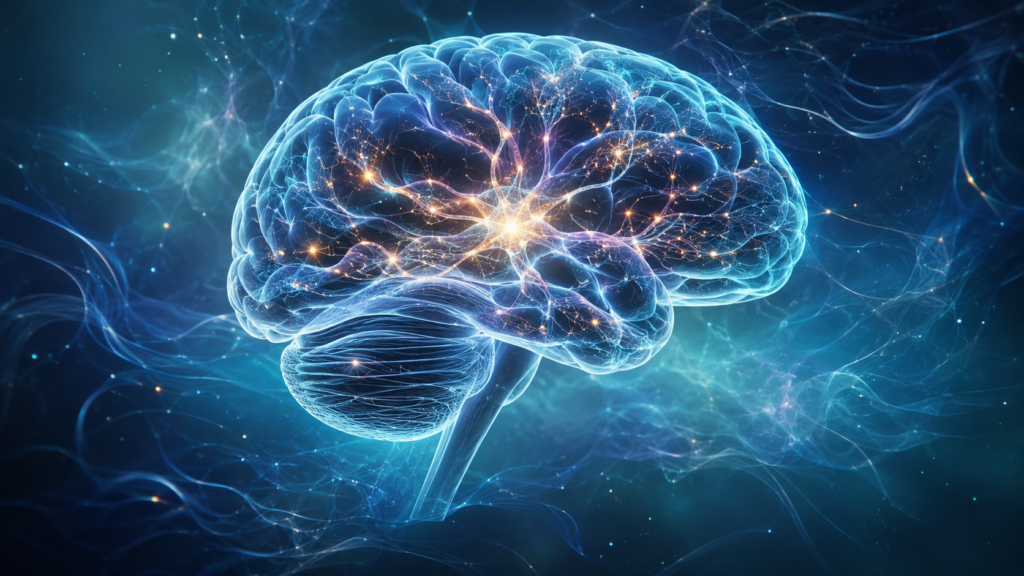
Why Are People Fascinated by the Subconscious Mind?
The idea that hidden mental processes shape our lives has fascinated people for centuries.
Ancient civilizations often believed dreams, intuition, and unexplained feelings reflected invisible forces within the mind.
Later, philosophers began asking questions such as:
- Why do people make irrational decisions?
- Why do memories influence behavior years later?
- How are habits formed?
- Why do emotions sometimes overpower logical thinking?
During the late nineteenth and early twentieth centuries, psychologists became increasingly interested in studying mental processes outside conscious awareness.
Although early theories differed from today’s scientific understanding, they encouraged researchers to investigate how unseen mental activity influences human behavior.
Modern neuroscience now allows scientists to study the brain using advanced imaging technologies, revealing that much of our information processing occurs automatically.
Researchers estimate that the brain receives enormous amounts of sensory information every second. Consciously processing every detail would be impossible.
Instead, the brain filters, organizes, and prioritizes information automatically before much of it ever reaches conscious awareness.
This automatic processing allows us to:
- Recognize familiar faces instantly.
- Read words without analyzing every letter.
- Maintain balance while walking.
- Drive familiar routes with little conscious effort.
- React quickly to potential danger.
- Understand spoken language almost effortlessly.
Without these automatic processes, everyday life would become extraordinarily slow and mentally exhausting.
Did You Know? Your brain continuously processes far more sensory information than your conscious mind can actively pay attention to. Automatic mental processes help filter this information so you can focus on what is most relevant at any given moment.
What Is the Subconscious Mind?
The term subconscious mind is widely used in everyday language, but its meaning can vary depending on the context.
In popular culture, it is sometimes described as a hidden mental storehouse capable of controlling every aspect of life.
Modern psychology, however, generally uses more precise terms such as:
- Automatic processing
- Nonconscious processing
- Implicit memory
- Unconscious cognitive processes
Although terminology differs, these concepts all describe mental activity that occurs without deliberate conscious awareness.
This includes processes such as:
- Forming habits.
- Recognizing patterns.
- Processing emotions.
- Learning motor skills.
- Interpreting facial expressions.
- Retrieving certain memories automatically.
These functions allow the brain to perform complex tasks efficiently while freeing conscious attention for problem-solving and decision-making.
Rather than existing as a completely separate “mind,” these automatic processes work alongside conscious thinking as part of a highly integrated brain.
A Simple Analogy
Imagine your mind as a large theater.
The spotlight on the stage represents your conscious awareness.
Only a small portion of the performance is illuminated at any one time.
Behind the curtains, however, an enormous team works continuously.
People manage lighting, scenery, costumes, sound, scheduling, and countless other tasks.
Although the audience rarely notices them, the performance depends on their work.
Automatic mental processes function in a similar way.
Most remain outside conscious awareness, yet they support nearly everything we do.
Like any analogy, this comparison has limitations, but it illustrates an important point:
Much of the brain’s work happens quietly in the background.
Why Does the Brain Automate So Much?
The human brain is remarkably efficient.
Instead of solving every problem from the beginning each time, it builds shortcuts through repetition and experience.
For example, think about learning to ride a bicycle.
At first, every movement requires conscious attention.
You carefully think about:
- Steering.
- Balancing.
- Pedaling.
- Braking.
- Looking ahead.
After sufficient practice, these actions gradually become automatic.
You can eventually ride while holding a conversation or observing your surroundings because the necessary skills have been stored through repeated learning.
This process allows the conscious mind to focus elsewhere while previously learned behaviors continue automatically.
The same principle applies to many everyday activities, including:
- Typing on a keyboard.
- Driving familiar routes.
- Reading.
- Speaking your native language.
- Playing a musical instrument.
- Preparing familiar meals.
Automation is one of the brain’s greatest strengths.
Science Spotlight: Neuroscientists have found that repeated practice strengthens communication between specific groups of neurons. Over time, these neural pathways become more efficient, making familiar tasks require less conscious effort—a phenomenon closely linked to learning and habit formation.
The Evolution of Our Understanding
Scientific understanding of the subconscious mind has changed considerably over time.
Early psychological theories often relied on observation and philosophical interpretation because researchers lacked the technology to study the living brain directly.
Today, advances such as:
- Functional Magnetic Resonance Imaging (fMRI)
- Electroencephalography (EEG)
- Positron Emission Tomography (PET)
- Cognitive neuroscience research
allow scientists to investigate how different parts of the brain contribute to memory, learning, emotions, decision-making, and automatic behavior.
Modern research suggests that mental processing is distributed across complex neural networks rather than controlled by a single “subconscious center.”
Different brain regions contribute to different types of automatic processing depending on the task being performed.
This more detailed understanding continues to evolve as new discoveries are made.
Historical Perspective: Ideas about hidden mental processes have existed for centuries, but modern neuroscience has transformed the discussion from philosophical speculation into scientific investigation. Today’s researchers study how networks of neurons support memory, attention, learning, emotion, and automatic behavior using sophisticated brain imaging technologies.
Key Terms
Conscious Mind: The thoughts, perceptions, and decisions you are actively aware of at any given moment.
Subconscious Mind (Popular Term): A commonly used term referring to mental processes that occur outside immediate conscious awareness. In scientific literature, related concepts include automatic or nonconscious processing.
Automatic Processing: Mental activities that occur efficiently without deliberate attention, such as recognizing familiar faces or performing well-practiced skills.
Implicit Memory: Memories that influence behavior without conscious recollection, including many habits and learned skills.
Neural Pathways: Networks of connected neurons that strengthen through repeated use, making information processing more efficient.
Quick Summary
In this first section, we’ve established the foundations for understanding the subconscious mind.
Key ideas include:
- The subconscious mind is best understood as a collection of automatic mental processes rather than a mysterious hidden entity.
- Much of the brain’s work happens outside conscious awareness.
- Automatic processing allows us to perform familiar tasks efficiently.
- Modern neuroscience provides evidence-based explanations for learning, habits, emotions, and memory.
- Understanding these processes helps explain many aspects of everyday behavior.
How the Brain Processes Information
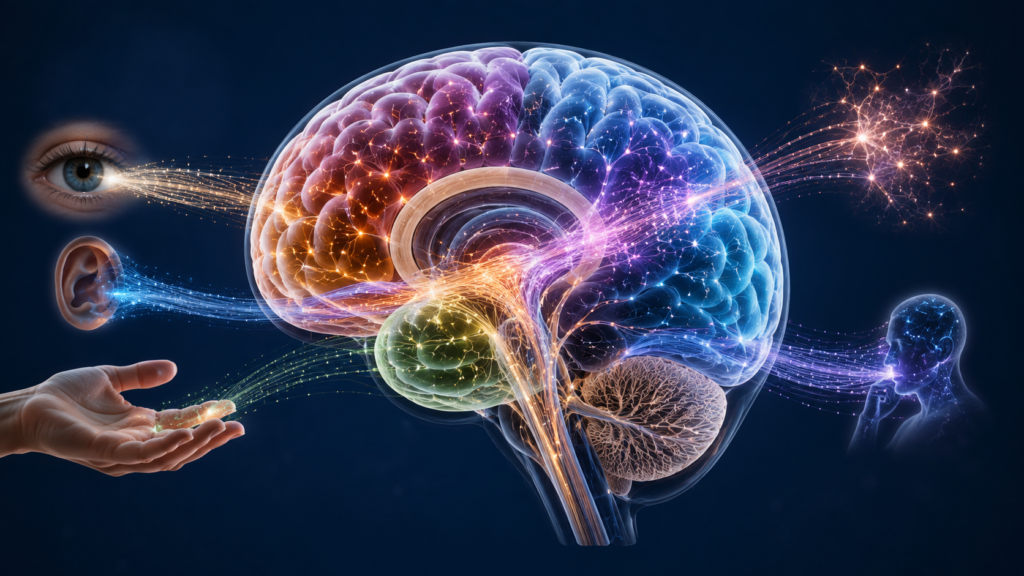
The human brain is often compared to a supercomputer, but in reality it works very differently. Rather than processing one task at a time, the brain performs billions of operations simultaneously. It continuously receives information from the senses, compares it with past experiences, predicts possible outcomes, regulates body functions, and helps us respond to the world around us.
Remarkably, most of this activity happens without conscious effort.
Every second, your eyes detect light, your ears receive sound waves, your skin senses temperature and pressure, your nose detects smells, and your tongue identifies tastes. At the same time, your brain regulates your heartbeat, breathing, posture, balance, and countless other biological processes.
If you had to consciously control every one of these activities, everyday life would become impossible.
Instead, the brain automatically decides which information deserves your conscious attention and which information can remain in the background.
CurioReader Insight: Your conscious mind is only aware of a small fraction of the information your brain processes every moment. Automatic mental processes constantly organize, filter, and prioritize information so that you can focus on what matters most.
Attention: The Brain’s Filter
One of the brain’s most important jobs is deciding where to direct attention.
Imagine walking through a busy airport.
Thousands of conversations, announcements, advertisements, lights, and movements surround you.
Yet you can still focus on reading a departure screen or talking with a friend.
This ability is possible because your brain filters out enormous amounts of information before it reaches conscious awareness.
Attention is therefore not simply about noticing something—it is also about ignoring countless other things.
Psychologists sometimes describe this as selective attention.
Examples include:
- Hearing your name in a crowded room.
- Concentrating on a book despite background noise.
- Ignoring the feeling of your clothes against your skin most of the day.
- Focusing on a conversation while music plays nearby.
These filtering processes help prevent the brain from becoming overwhelmed.
Pattern Recognition
The brain is exceptionally good at identifying patterns.
This ability allows people to:
- Recognize familiar faces instantly.
- Understand spoken language.
- Read words quickly.
- Predict the movement of objects.
- Identify emotional expressions.
- Detect potential dangers.
Pattern recognition develops through experience.
The more often the brain encounters a particular pattern, the more efficiently it recognizes it in the future.
For example, experienced drivers often notice potential hazards much earlier than beginners because years of experience have trained their brains to recognize important patterns automatically.
Memory Systems
Memory is much more complex than simply storing information.
Different types of memory serve different purposes.
Working Memory
Working memory temporarily holds information that you are actively using.
Examples include:
- Remembering a phone number long enough to dial it.
- Following directions.
- Solving a mathematical problem.
- Holding several ideas in mind during a conversation.
Working memory has limited capacity, which is one reason people cannot consciously think about many complicated things at once.
Long-Term Memory
Long-term memory stores information over much longer periods.
It includes:
- Personal experiences.
- Facts and knowledge.
- Skills.
- Language.
- Motor movements.
Many long-term memories influence behavior without requiring conscious recall.
For example, you probably don’t consciously remember learning how to tie your shoes, yet you can still perform the task automatically.
Implicit Memory
One particularly important form of long-term memory is implicit memory.
Implicit memories influence behavior without conscious awareness.
Examples include:
- Riding a bicycle.
- Swimming.
- Typing on a keyboard.
- Playing a musical instrument.
- Driving familiar routes.
These learned skills become increasingly automatic through repetition.
Did You Know? Researchers believe that sleep plays a major role in strengthening memories. During sleep, the brain helps organize newly learned information, making it easier to remember and apply in the future.
Conscious Mind vs. Subconscious Mind
One of the easiest ways to understand the subconscious mind is by comparing it with conscious thinking.
Although they are not separate physical structures, they represent different ways the brain processes information.
The conscious mind is responsible for deliberate thinking, reasoning, planning, and decision-making.
Automatic mental processes handle activities that have become familiar through experience or must occur quickly and efficiently.
Rather than competing with one another, these systems work together continuously.
Characteristics of Conscious Thinking
Conscious thinking is generally:
- Deliberate.
- Logical.
- Analytical.
- Slow.
- Flexible.
- Attention demanding.
You rely on conscious thinking when:
- Solving unfamiliar problems.
- Learning new skills.
- Making important decisions.
- Reading difficult material.
- Planning future activities.
Because conscious thinking requires mental effort, it cannot effectively manage many complex tasks simultaneously.
Characteristics of Automatic Processing
Automatic mental processing is typically:
- Fast.
- Efficient.
- Experience based.
- Habit driven.
- Continuous.
- Largely effortless.
Examples include:
- Walking.
- Reading familiar words.
- Recognizing emotions.
- Driving familiar roads.
- Catching a falling object.
- Understanding your native language.
These automatic processes free conscious attention for more demanding activities.
How They Work Together
Consider learning to drive a car.
Initially, every action requires careful concentration.
You consciously think about:
- Adjusting mirrors.
- Steering.
- Checking traffic.
- Using indicators.
- Controlling speed.
With practice, many of these tasks become automatic.
An experienced driver can safely manage routine driving while consciously planning the day’s schedule or listening to a podcast, although full attention is still required whenever road conditions become challenging.
This illustrates an important principle:
Automatic processing handles familiar situations, while conscious thinking becomes more active when something new or unexpected occurs.
Science Spotlight: Brain imaging studies suggest that learning often shifts activity from regions associated with conscious attention toward networks involved in automatic processing. This helps explain why practiced skills gradually require less mental effort over time.
Everyday Examples of the Subconscious Mind at Work
Automatic mental processes influence far more of daily life than most people realize.
Here are a few familiar examples.
Reading
When you read this sentence, you probably recognize entire words almost instantly.
You are not consciously analyzing every individual letter.
Years of reading experience have made word recognition highly automatic.
Driving
Experienced drivers often reach their destination with little memory of every individual turn along the way.
This does not mean they were unconscious.
Rather, many driving behaviors had become highly practiced and automatic.
Language
Native speakers rarely think consciously about grammar before speaking.
Instead, language production largely depends upon automatic mental processing developed through years of practice.
Habits
Many daily routines happen almost automatically.
Examples include:
- Brushing your teeth.
- Locking your front door.
- Checking your phone.
- Making morning coffee.
- Walking familiar routes.
These behaviors require relatively little conscious thought because they have become well-established habits.
Emotional Reactions
Suppose someone suddenly drops a heavy object nearby.
You may jump before consciously identifying the sound.
Your brain rapidly evaluates potential danger using automatic processing before conscious analysis is complete.
This ability has important survival value.
CurioReader Insight: Automatic processing is neither “good” nor “bad.” It simply helps the brain conserve mental energy by handling familiar situations efficiently. The challenge arises when unhealthy habits or inaccurate thinking patterns also become automatic.
Why Understanding the Subconscious Mind Matters
Learning about automatic mental processes is valuable because they influence many important aspects of life.
These include:
- Daily habits.
- Emotional reactions.
- Learning new skills.
- Decision-making.
- Motivation.
- Confidence.
- Relationships.
- Productivity.
Many people attempt to change behavior simply by relying on willpower.
However, lasting change often requires understanding how habits are formed and how automatic mental patterns develop.
Fortunately, the brain remains capable of adapting throughout life.
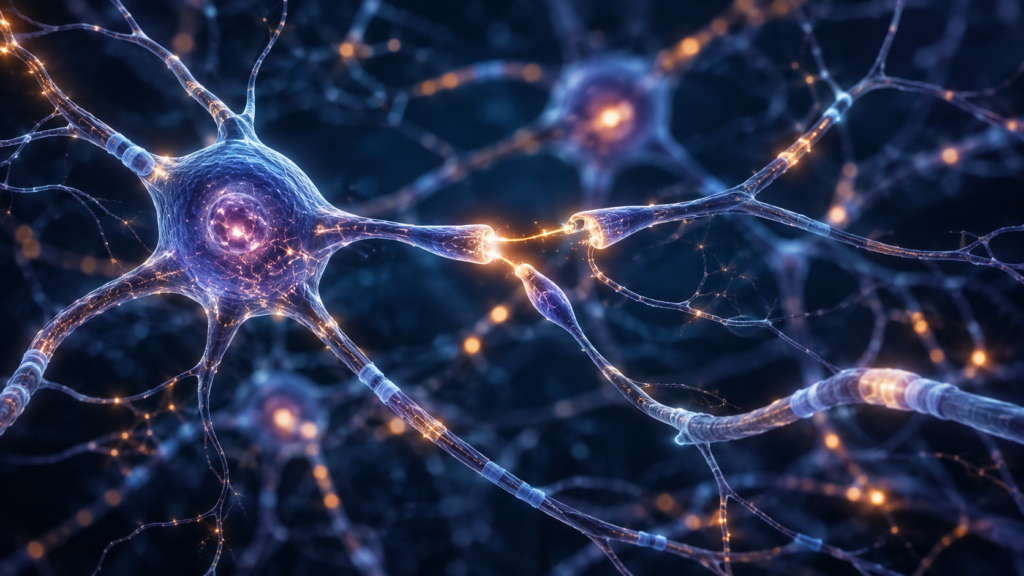
Scientists refer to this remarkable ability as neuroplasticity—the brain’s capacity to strengthen existing neural pathways and create new ones through learning and repeated experience.
We’ll explore neuroplasticity in detail later in this guide.
Historical Perspective: For much of history, people believed personality and behavior were largely fixed. Modern neuroscience has demonstrated that the brain remains adaptable throughout life, continually changing in response to learning, experience, and practice.
Key Terms
Selective Attention: The brain’s ability to focus on important information while filtering out distractions.
Working Memory: The temporary storage system used when actively thinking or solving problems.
Long-Term Memory: Information stored for future use, including facts, experiences, and learned skills.
Implicit Memory: Memory that influences behavior without conscious awareness.
Neuroplasticity: The brain’s ability to reorganize and strengthen neural connections through learning and experience.
Quick Summary
In Part 1, we’ve explored the foundations of the subconscious mind and how automatic mental processes support everyday life.
Key points include:
- The brain processes enormous amounts of information automatically every second.
- Attention acts as a filter, allowing conscious awareness to focus on what matters most.
- Different memory systems work together to support learning and behavior.
- Conscious thinking and automatic processing complement each other rather than compete.
- Many everyday activities—from reading to driving—depend on well-practiced automatic mental processes.
- Understanding these processes provides the foundation for improving habits, learning, and personal growth.
How Habits Are Formed
From the moment you wake up until you go to bed, much of your day is guided by habits. You may brush your teeth, prepare breakfast, drive to work, check your phone, greet colleagues, or lock your front door without giving these actions much conscious thought.
Habits are the brain’s way of making repeated behaviors more efficient.
Instead of requiring conscious decision-making every time, the brain gradually automates frequently repeated actions. This allows mental energy to be reserved for new challenges and complex problems.
Without habits, even simple daily routines would require constant concentration.
CurioReader Insight: Habits are not signs of laziness or mindlessness. They are highly efficient mental shortcuts that allow the brain to conserve energy by reducing the need for repeated conscious decisions.
Why the Brain Creates Habits
The brain is constantly looking for ways to work more efficiently.
Every conscious decision requires mental effort.
Imagine having to consciously think through every small action during the day:
- How to tie your shoes.
- Which hand to use when opening a door.
- Every step involved in making coffee.
- Every key while typing.
- Every movement while driving.
Mental fatigue would appear very quickly.
To avoid this, the brain identifies behaviors that occur repeatedly and gradually converts them into automatic routines.
Over time, these behaviors require less attention and become easier to perform.
The Habit Loop
Researchers often describe habit formation using a simple framework known as the habit loop.
Although real human behavior is often more complex, this model provides a useful way to understand many everyday habits.
The habit loop consists of three main components:
1. Cue
A cue is the trigger that tells the brain to begin a particular behavior.
Examples include:
- Waking up.
- Hearing a notification.
- Feeling stressed.
- Entering a room.
- Smelling fresh coffee.
- Finishing dinner.
2. Routine
The routine is the behavior itself.
Examples include:
- Checking your phone.
- Drinking coffee.
- Going for a walk.
- Brushing your teeth.
- Opening social media.
- Exercising.
3. Reward
The reward reinforces the behavior by providing some form of satisfaction.
Rewards may include:
- Feeling relaxed.
- Enjoyment.
- Reduced stress.
- A sense of accomplishment.
- Social connection.
- Physical comfort.
When this cycle repeats many times, the brain gradually strengthens the associated neural pathways, making the routine increasingly automatic.
How Repetition Changes the Brain
Every time a behavior is repeated, the brain reinforces the neural pathways involved in performing it.
Initially, these pathways are relatively weak.
Repeated practice strengthens communication between neurons, making future repetitions easier.
This process helps explain why:
- Learning to drive becomes easier.
- Typing speed improves.
- Musical skills develop.
- Languages become more natural.
- Daily routines become automatic.
The same principle applies to both beneficial and unhealthy habits.
The brain does not automatically distinguish between them.
It simply strengthens behaviors that occur repeatedly.
Science Spotlight: Repeated behaviors strengthen communication between neurons through a process known as synaptic plasticity. Stronger neural connections allow familiar actions to be performed more efficiently and with less conscious effort.

Automatic Behaviors in Everyday Life
Most automatic behaviors develop gradually over months or years.
Many begin during childhood and continue throughout adulthood.
Examples include:
- Greeting people.
- Driving familiar routes.
- Organizing your workspace.
- Making morning coffee.
- Locking the house before leaving.
- Checking your smartphone after hearing a notification.
These behaviors often occur so naturally that people barely notice them.
Automatic behaviors save time and mental effort, allowing attention to focus elsewhere.
However, because they occur with little conscious awareness, they can also become difficult to change.
Good Habits and Bad Habits
Habits themselves are neutral.
Whether a habit is beneficial or harmful depends entirely on the behavior.
Healthy Habits
Examples include:
- Daily exercise.
- Reading regularly.
- Drinking enough water.
- Practicing mindfulness.
- Maintaining good sleep routines.
- Eating balanced meals.
These habits generally support long-term well-being.
Unhealthy Habits
Examples include:
- Excessive screen time.
- Procrastination.
- Nail biting.
- Smoking.
- Poor sleep schedules.
- Emotional eating.
Although these habits may provide short-term comfort or convenience, they can become difficult to change once deeply established.
Why Breaking Habits Is Difficult
Many people believe breaking a habit simply requires stronger willpower.
In reality, changing behavior is usually more complicated.
Habits become deeply embedded because they involve well-practiced neural pathways.
When a familiar cue appears, the brain often initiates the routine automatically before conscious thought has much opportunity to intervene.
This is why people sometimes realize they have opened a social media app almost automatically or reached for a snack without consciously deciding to do so.
Changing habits usually requires:
- Recognizing the cue.
- Interrupting the routine.
- Replacing it with a healthier alternative.
- Repeating the new behavior consistently.
Lasting change generally occurs through gradual repetition rather than dramatic overnight transformation.
Did You Know? Researchers have found that forming a new habit often takes much longer than the popular “21-day rule” suggests. The actual time varies considerably depending on the individual and the complexity of the behavior, with consistency playing a far more important role than any fixed number of days.
Limiting Beliefs: How Automatic Thinking Develops
Not all automatic mental processes involve physical actions.
The brain also develops automatic patterns of thinking.
These recurring thought patterns are sometimes referred to as limiting beliefs when they discourage growth or reduce confidence.
Examples include:
- “I’m not good at mathematics.”
- “I always fail.”
- “I’m too old to learn something new.”
- “People won’t listen to me.”
These beliefs often develop gradually through repeated experiences, social influences, cultural expectations, or personal interpretations of events.
Importantly, they are not always accurate.
They represent learned interpretations rather than objective facts.
Where Do Limiting Beliefs Come From?
Many influences shape our beliefs over time.
These may include:
- Childhood experiences.
- Family environments.
- School experiences.
- Social interactions.
- Cultural messages.
- Personal successes and failures.
- Repeated self-talk.
The brain naturally looks for patterns.
If a particular interpretation is repeated often enough, it may gradually become an automatic expectation.
For example, a student who performs poorly in mathematics several times may eventually conclude, “I’m simply not a math person.”
This belief can influence future motivation and performance even if improvement remains entirely possible.
Confirmation Bias
Once beliefs become established, the brain often pays greater attention to information that appears to support them.
Psychologists refer to this tendency as confirmation bias.
Examples include:
- Remembering failures more clearly than successes.
- Noticing criticism while overlooking praise.
- Focusing on mistakes instead of progress.
Confirmation bias does not mean people intentionally ignore evidence.
Instead, it reflects the brain’s natural tendency to organize information according to existing expectations.
Recognizing this tendency is an important step toward developing more balanced thinking.
CurioReader Insight: Beliefs influence how we interpret experiences, but they are not permanent. As we gain new knowledge and experiences, the brain remains capable of updating many long-held assumptions.
Quick Summary
This section explored how automatic behaviors and thought patterns develop.
Key ideas include:
- Habits allow the brain to conserve mental energy.
- The habit loop consists of cues, routines, and rewards.
- Repetition strengthens neural pathways, making behaviors more automatic.
- Both healthy and unhealthy habits develop through similar learning processes.
- Limiting beliefs often arise from repeated experiences and interpretations rather than objective reality.
- Understanding how habits and beliefs form provides the foundation for lasting personal growth.
Emotional Conditioning: Why Feelings Shape Automatic Behavior
Our thoughts influence our emotions, but the reverse is also true. Emotions can shape the way we think, make decisions, remember experiences, and respond to future situations.
One reason emotional experiences are so powerful is that the brain often gives them special priority.
Events associated with strong emotions—whether positive or negative—are more likely to be remembered than ordinary daily experiences. This ability has important evolutionary value because remembering emotionally significant events can help people respond more effectively to similar situations in the future.
For example, if someone once touched a hot stove and was burned, they are unlikely to repeat the mistake. Likewise, positive experiences can encourage behaviors that the brain associates with safety, success, or enjoyment.
CurioReader Insight: The brain does not store memories as isolated facts. Memories are often linked with emotions, making certain experiences easier to recall and more influential in shaping future behavior.
Emotional Learning
Emotional learning occurs throughout life.
The brain constantly connects experiences with emotional responses.
Examples include:
- Feeling relaxed after listening to calming music.
- Becoming anxious before an important examination.
- Smiling when hearing a favorite song.
- Feeling comforted by familiar places or people.
- Developing confidence after repeated success.
Over time, these emotional associations can become increasingly automatic.
Sometimes they help us.
Sometimes they become obstacles.
Recognizing these patterns is the first step toward changing them.
Stress and Automatic Reactions
Stress affects how the brain processes information.
During stressful situations, the brain often prioritizes speed over careful analysis.
This can be beneficial during emergencies because rapid responses may improve survival.
However, chronic stress can make people more likely to rely on automatic habits instead of thoughtful decision-making.
Examples include:
- Emotional eating.
- Impulsive spending.
- Avoiding difficult tasks.
- Excessive phone use.
- Irritability.
Learning healthy ways to manage stress can therefore improve both emotional well-being and decision-making.
The Role of Attention
Emotions also influence attention.
People naturally pay more attention to information connected with their current emotional state.
For example:
- Someone feeling worried may notice potential problems more readily.
- Someone in a positive mood may be more open to creative thinking.
- Someone feeling angry may interpret neutral situations more negatively.
Understanding this relationship helps explain why emotions can influence perception without us realizing it.
Did You Know? Researchers have found that positive emotions can broaden attention and encourage creative problem-solving, while strong negative emotions often narrow attention toward immediate concerns. Both responses can be useful depending on the situation.
Neuroplasticity: The Brain’s Ability to Change
For many years, scientists believed that the adult brain was largely fixed and incapable of significant change.
Modern neuroscience has shown that this belief is incorrect.
Although certain aspects of brain development occur during childhood, the brain remains capable of adapting throughout life.
This remarkable ability is known as neuroplasticity.
Neuroplasticity refers to the brain’s capacity to strengthen existing neural connections, weaken unused ones, and form new pathways through learning and experience.
This adaptability explains how people continue learning new languages, musical instruments, professional skills, and healthy habits throughout adulthood.
How Neuroplasticity Works
Every experience leaves a small mark on the brain.
When experiences are repeated, the associated neural pathways become stronger.
Conversely, pathways that are rarely used may gradually become less efficient.
Think of a forest trail.
A path used every day becomes wide, smooth, and easy to follow.
A path rarely used slowly becomes overgrown.
Neural pathways behave in a similar way.
Repeated thoughts and behaviors strengthen certain connections, making them easier for the brain to use again.
Everyday Examples of Neuroplasticity
Neuroplasticity can be seen in many aspects of daily life.
Examples include:
- Learning to play the piano.
- Becoming fluent in a new language.
- Recovering certain skills after brain injury (with rehabilitation).
- Improving athletic performance.
- Developing better study habits.
- Changing daily routines.
These examples demonstrate that learning is not limited to childhood.
The brain remains adaptable throughout life.
Science Spotlight: Brain imaging studies show that learning new skills can produce measurable changes in neural activity and connectivity. This ongoing adaptability is one of the most exciting discoveries in modern neuroscience.
Can You Reprogram the Subconscious Mind?
This question appears frequently in books, videos, and online discussions.
The answer depends on how the phrase “reprogram the subconscious mind” is understood.
If it suggests instant transformation through hidden mental powers, there is no strong scientific evidence to support such claims.
However, if it refers to gradually changing automatic thoughts, habits, and behaviors through repeated learning and practice, then modern psychology provides substantial evidence that meaningful change is possible.
Rather than “reprogramming” the mind like a computer, people reshape mental patterns through consistent experience.
Evidence-Based Ways to Change Automatic Patterns
Researchers have identified several approaches that support long-term behavioral change.
Repetition
Repeated practice strengthens new neural pathways.
The more consistently a new behavior is performed, the more familiar it becomes.
Deliberate Practice
Focused practice with clear goals generally produces greater improvement than simply repeating a behavior without attention.
Cognitive Restructuring
Cognitive restructuring involves identifying unhelpful thinking patterns and replacing them with more balanced, evidence-based perspectives.
This approach is commonly used within cognitive behavioral therapy (CBT).
Positive Self-Talk
The way people speak to themselves can influence motivation and confidence.
Replacing overly negative self-talk with realistic, constructive language may support healthier thinking over time.
For example:
Instead of saying:
“I always fail.”
A more balanced statement might be:
“This challenge is difficult, but I can improve with practice.”
Healthy Environments
Behavior is strongly influenced by surroundings.
Small environmental changes can make healthy habits easier.
Examples include:
- Keeping books within easy reach.
- Preparing healthy meals in advance.
- Reducing digital distractions.
- Creating dedicated study spaces.
- Establishing regular routines.
Sometimes changing the environment is easier than relying entirely on willpower.
CurioReader Insight: Long-term personal growth rarely happens through dramatic overnight change. Instead, lasting improvement usually results from many small, consistent actions repeated over weeks, months, and years.
The Role of Mindfulness
One of the most effective ways to become aware of automatic mental processes is through mindfulness.
Mindfulness involves paying attention to the present moment with openness and curiosity rather than judgment.
Instead of reacting automatically, mindfulness encourages people to observe:
- Thoughts.
- Emotions.
- Physical sensations.
- Habits.
- Reactions.
This awareness creates a valuable pause between stimulus and response.
That pause allows conscious decision-making to play a greater role.
For example, someone who notices an urge to check social media every few minutes may gradually learn to recognize the habit before acting on it.
Awareness alone does not immediately change behavior.
However, it creates opportunities for intentional choice.
Small Changes Lead to Big Results
People often underestimate the power of small improvements.
A single healthy decision may seem insignificant.
Repeated consistently over months or years, however, those small actions gradually strengthen new neural pathways and establish healthier routines.
Examples include:
- Reading for ten minutes each day.
- Taking a short daily walk.
- Practicing meditation regularly.
- Writing in a journal.
- Going to bed at a consistent time.
These seemingly modest habits can produce meaningful long-term change through repetition.
Future Research: Scientists continue studying how sleep, nutrition, exercise, mindfulness, and emerging technologies influence learning, memory, and neuroplasticity. Future discoveries may provide even deeper insights into how the brain adapts throughout life.
Key Terms
Emotional Conditioning: The process by which emotions become associated with particular experiences or situations.
Neuroplasticity: The brain’s ability to reorganize itself by strengthening existing neural pathways and forming new ones through learning and experience.
Cognitive Restructuring: A psychological technique that helps identify and modify unhelpful patterns of thinking.
Mindfulness: The practice of paying attention to the present moment with awareness and without unnecessary judgment.
Deliberate Practice: Focused, goal-oriented practice designed to improve performance and learning.
Quick Summary
In this section, we’ve explored how emotions, learning, and brain adaptability influence automatic mental processes.
Key ideas include:
- Emotional experiences strongly influence memory and future behavior.
- Stress can increase reliance on automatic habits and reactions.
- Neuroplasticity allows the brain to adapt throughout life.
- Meaningful behavioral change occurs through repetition, learning, and consistent practice.
- Mindfulness helps increase awareness of automatic thoughts and behaviors.
- Small daily improvements can gradually reshape long-established mental patterns.
Meditation and the Subconscious Mind
Meditation has been practiced for thousands of years across many cultures and traditions. Originally associated with spiritual and religious practices, meditation is now widely studied by psychologists, neuroscientists, and healthcare professionals for its potential benefits on attention, stress management, emotional regulation, and overall well-being.
Because meditation encourages people to observe their thoughts rather than react to them automatically, it is often linked to discussions about the subconscious mind.
Many people describe meditation as a way to “access the subconscious.” While this phrase is common in popular culture, modern science offers a more precise explanation.
Meditation does not reveal a hidden mental world filled with secret knowledge. Instead, it helps people become more aware of thoughts, emotions, and habitual reactions that often operate automatically in everyday life.
This increased awareness creates opportunities to respond more intentionally rather than simply following established mental patterns.
CurioReader Insight: Meditation does not stop thoughts from appearing. Instead, it changes the way we relate to them, making it easier to notice automatic mental patterns without immediately reacting to them.
What Happens During Meditation?
When people begin meditating, they often expect the mind to become completely quiet.
In reality, most people continue experiencing thoughts, memories, emotions, and sensations.
The difference is that meditation encourages observing these experiences without immediately judging or reacting to them.
For example, during a simple breathing meditation, you may notice:
- Thoughts about work.
- Memories from childhood.
- Future plans.
- Worries.
- Random ideas.
- Physical sensations.
Rather than trying to suppress these experiences, meditation teaches people to gently acknowledge them before returning attention to the chosen point of focus.
Over time, many practitioners report becoming more aware of recurring thought patterns that previously went unnoticed.
Meditation and Automatic Thinking
Many daily reactions occur so quickly that we hardly notice them.
For example:
Someone criticizes us.
Before consciously thinking, we may:
- Feel defensive.
- Become anxious.
- Feel angry.
- Doubt ourselves.
- Withdraw from the conversation.
Meditation helps create a small pause between the event and the response.
Within that pause lies the opportunity to make a more thoughtful decision.
Instead of reacting automatically, people may gradually learn to respond with greater awareness.
This process does not eliminate emotions.
Rather, it helps reduce impulsive reactions.
Scientific Research on Meditation
Researchers have studied meditation extensively over recent decades.
Although results vary depending on the individual and the type of meditation practiced, studies suggest regular meditation may contribute to improvements in areas such as:
- Attention.
- Emotional regulation.
- Stress management.
- Self-awareness.
- Working memory.
- Psychological well-being.
Scientists continue investigating how different meditation practices influence brain activity and long-term learning.
While meditation is not a cure-all, evidence suggests it can become a valuable component of a healthy lifestyle when practiced consistently.
Science Spotlight: Brain imaging studies have found that regular meditation practice can be associated with measurable changes in brain activity related to attention, emotional regulation, and self-awareness. Researchers continue exploring how these changes develop over time.

Different Types of Meditation
Meditation is not a single technique.
Instead, it includes many different approaches, each with its own purpose and methods.
Mindfulness Meditation
Mindfulness meditation involves paying attention to the present moment without unnecessary judgment.
Practitioners commonly observe:
- Breathing.
- Physical sensations.
- Thoughts.
- Emotions.
- Sounds.
This is one of the most widely researched forms of meditation.
Focused Attention Meditation
In this approach, attention remains fixed on one object, such as:
- The breath.
- A candle flame.
- A repeated word or phrase.
- Gentle sounds.
Whenever the mind wanders, attention is calmly returned to the chosen focus.
This practice helps strengthen concentration.
Loving-Kindness Meditation
Also known as Metta meditation, this practice encourages feelings of kindness and compassion toward:
- Yourself.
- Family members.
- Friends.
- Strangers.
- Even people with whom you disagree.
Research suggests this form of meditation may support empathy and positive emotional well-being.
Body Scan Meditation
Body scan meditation involves gradually moving attention through different parts of the body while observing sensations without judgment.
It is commonly used to encourage relaxation and increase awareness of physical tension.
Did You Know? Meditation practices exist in many cultures and traditions around the world. Although techniques vary, many share common goals such as improving attention, self-awareness, compassion, and emotional balance.
Visualization: Training the Mind Through Mental Practice
Visualization is another technique frequently associated with the subconscious mind.
It involves mentally imagining a situation, activity, or goal in vivid detail.
Athletes, musicians, surgeons, and public speakers often use visualization as part of their preparation.
Rather than replacing physical practice, visualization is generally most effective when combined with real-world learning and experience.
Why Visualization Can Be Helpful
Mental rehearsal activates many of the same brain regions involved in performing actual tasks.
This may help strengthen learning by allowing people to mentally practice skills before carrying them out physically.
Examples include:
- Rehearsing a presentation.
- Practicing a musical performance.
- Preparing for an interview.
- Visualizing athletic movements.
- Planning difficult conversations.
Visualization can also improve confidence by increasing familiarity with upcoming situations.
Visualization Is Not Magic
Popular media sometimes portrays visualization as a guaranteed method for achieving success.
Scientific evidence does not support the idea that simply imagining success automatically causes it to happen.
Visualization works best when combined with:
- Learning.
- Preparation.
- Consistent practice.
- Goal setting.
- Realistic action.
Mental rehearsal supports performance—it does not replace effort.
CurioReader Insight: Visualization is most effective when it complements real-world action. Imagining success can improve confidence and preparation, but lasting results still depend on learning, practice, and persistence.
Sleep, Memory, and the Subconscious Mind
Although people often think of sleep as a period of inactivity, the brain remains remarkably active throughout the night.
Scientists now understand that sleep plays an essential role in learning and memory.
During sleep, the brain helps organize information gathered during the day.
This process is known as memory consolidation.
Rather than storing every experience permanently, the brain strengthens important memories while reducing less useful information.
Why Sleep Matters for Learning
Quality sleep supports many mental functions, including:
- Learning.
- Attention.
- Problem-solving.
- Emotional regulation.
- Memory formation.
- Decision-making.
Poor sleep can make concentration more difficult and reduce the brain’s ability to learn efficiently.
This explains why adequate rest is considered an important part of both education and personal development.
Dreams and Memory
Researchers continue studying the purpose of dreams.
Although many questions remain unanswered, evidence suggests dreaming may contribute to:
- Emotional processing.
- Creativity.
- Memory organization.
- Problem-solving.
Dreams should not generally be interpreted as direct predictions of future events.
Instead, they appear to reflect the brain’s ongoing processing of memories, emotions, and experiences.
Historical Perspective: Ancient civilizations often viewed dreams as messages from supernatural forces. Modern neuroscience generally explains dreaming as a natural part of the brain’s activity during sleep, although researchers continue investigating its precise functions.
Quick Summary
This section explored how meditation, visualization, and sleep relate to the subconscious mind.
Key ideas include:
- Meditation increases awareness of automatic thoughts and emotional patterns.
- Different meditation techniques support different aspects of mental well-being.
- Visualization strengthens learning when combined with deliberate practice.
- Sleep plays a vital role in memory consolidation and emotional processing.
- Dreams continue to be an active area of scientific research.
- Healthy mental habits develop through consistent practice rather than quick fixes.
Practical Daily Exercises for Developing Healthier Mental Habits
Understanding how the subconscious mind works is valuable, but applying that knowledge in everyday life is what leads to meaningful personal growth. Fortunately, developing healthier mental patterns does not require dramatic changes. Small, consistent actions practiced over time can gradually strengthen new neural pathways and encourage more constructive habits.
The following evidence-based practices can help increase self-awareness and support long-term behavioral change.
Practice Mindful Observation
One of the simplest ways to become more aware of automatic thoughts is to pause for a few minutes each day and observe your mental activity.
Rather than trying to control every thought, simply notice:
- What you are thinking.
- How you are feeling.
- Physical sensations.
- Emotional reactions.
- Recurring worries.
- Positive experiences.
The goal is not to judge yourself but to develop greater awareness of your own mental patterns.
Over time, many people become better at recognizing automatic reactions before acting on them.
Keep a Reflection Journal
Writing down thoughts and experiences helps organize information that might otherwise remain vague or unnoticed.
A daily journal can include:
- Personal goals.
- Gratitude lists.
- Challenges faced.
- Lessons learned.
- Emotional responses.
- New habits being developed.
Reviewing earlier entries often reveals recurring patterns that are difficult to recognize in everyday life.
Build One Habit at a Time
Trying to change many habits simultaneously can become overwhelming.
Instead, focus on one realistic improvement.
For example:
- Walking for ten minutes every day.
- Reading one chapter each evening.
- Drinking more water.
- Going to bed at a consistent time.
- Practicing five minutes of mindfulness.
Once a behavior becomes established, introducing another positive habit becomes easier.
Use Environmental Cues
Your surroundings strongly influence behavior.
Small changes to your environment can encourage healthy habits.
Examples include:
- Keeping healthy snacks visible.
- Placing books where they are easy to reach.
- Charging your phone outside the bedroom.
- Preparing exercise clothes the night before.
- Removing unnecessary distractions from your workspace.
Changing the environment often requires less willpower than constantly resisting temptation.
Practice Self-Compassion
Everyone makes mistakes.
Developing healthier mental habits does not require perfection.
When setbacks occur:
- Acknowledge them.
- Learn from them.
- Continue moving forward.
Harsh self-criticism often discourages long-term progress, whereas self-compassion supports resilience and continued learning.
CurioReader Insight: Lasting personal growth usually comes from consistency rather than intensity. Small improvements repeated over months and years often produce far greater results than short bursts of extreme effort.

Common Myths About the Subconscious Mind
The popularity of the subconscious mind has led to many misconceptions. Separating evidence-based knowledge from popular myths helps create a more realistic understanding of how the mind works.
Myth 1: We Use Only 10% of Our Brain
This is one of the most widespread myths.
Modern brain imaging clearly shows that different parts of the brain become active during different tasks.
Although not every region is active simultaneously, healthy brains use far more than ten percent of their capacity over the course of a normal day.
Myth 2: The Subconscious Mind Can Instantly Change Reality
Some books and online videos suggest that simply thinking positively can immediately transform external circumstances.
While optimism can improve motivation, resilience, and decision-making, there is no scientific evidence that thoughts alone directly change external reality without corresponding action.
Meaningful change generally requires:
- Learning.
- Practice.
- Persistence.
- Adaptation.
- Real-world effort.
Myth 3: Meditation Stops All Thoughts
Many beginners believe successful meditation requires an empty mind.
In reality, thoughts naturally continue arising.
Meditation teaches people to observe thoughts without becoming completely absorbed by them.
Improvement comes through practice rather than achieving perfect mental silence.
Myth 4: Habits Cannot Be Changed
Research on neuroplasticity demonstrates that habits can change throughout life.
Although long-established behaviors often require patience and repetition to modify, the brain remains capable of learning and adapting.
Myth 5: Intelligence Is Fixed
Modern psychology recognizes that learning, experience, education, and deliberate practice all contribute to cognitive development.
While individuals naturally differ in strengths and abilities, the brain retains considerable capacity for growth throughout life.
Did You Know? The adult brain continues forming and strengthening neural connections throughout life. Learning a new language, musical instrument, or practical skill encourages the brain to build and refine these networks.
Frequently Asked Questions
Is the subconscious mind real?
The term subconscious mind is widely used in everyday language. In modern psychology and neuroscience, related concepts are usually described as automatic, nonconscious, or unconscious mental processes that influence thoughts, emotions, habits, and behavior outside immediate conscious awareness.
Can the subconscious mind be changed?
Yes. Research suggests that repeated learning, healthy habits, mindfulness, cognitive restructuring, and deliberate practice can gradually reshape automatic patterns of thinking and behavior through neuroplasticity.
Does meditation access the subconscious mind?
Meditation increases awareness of thoughts, emotions, and automatic mental patterns. Rather than revealing hidden supernatural knowledge, it helps people observe their internal experiences more clearly and respond more intentionally.
How long does it take to change a habit?
There is no universal timeline.
The time required depends on factors such as the individual, the complexity of the behavior, the environment, motivation, and consistency of practice.
Can positive thinking solve every problem?
Positive thinking alone is not enough.
Constructive thinking is most effective when combined with realistic planning, learning, healthy habits, and consistent action.
Key Takeaways
- Much of human behavior is influenced by automatic mental processes operating outside conscious awareness.
- The subconscious mind is best understood through modern concepts such as automatic processing, implicit memory, and nonconscious cognition.
- Habits develop through repetition and become stronger as neural pathways are reinforced.
- Emotions, experiences, and beliefs influence how the brain interprets future situations.
- Neuroplasticity allows the brain to continue learning and adapting throughout life.
- Meditation and mindfulness help increase awareness of automatic thoughts and emotional responses.
- Visualization can support learning and performance when combined with deliberate practice.
- Healthy sleep plays an important role in memory consolidation and emotional well-being.
- Small, consistent improvements are generally more effective than seeking rapid transformation.
- Understanding how the mind works empowers people to make more intentional choices in everyday life.
Conclusion
The subconscious mind remains one of the most fascinating aspects of human psychology because it quietly influences so much of everyday life. From the habits we develop and the memories we retain to the emotions we experience and the decisions we make, countless mental processes operate outside our immediate awareness.
Modern psychology and neuroscience show that these processes are neither mysterious nor magical. Instead, they represent highly efficient systems that allow the brain to process information, recognize patterns, automate routine behaviors, and adapt to new experiences. By understanding these automatic mechanisms, we gain valuable insight into why change can sometimes feel difficult—and why meaningful improvement remains possible.
Perhaps the most encouraging discovery is that the brain is remarkably adaptable. Through neuroplasticity, people continue learning, strengthening new habits, modifying unhelpful thought patterns, and developing healthier behaviors throughout life. Practices such as mindfulness, meditation, deliberate learning, quality sleep, and consistent repetition all contribute to this ongoing process of growth.
Rather than seeking quick fixes or extraordinary claims, lasting personal development is built through curiosity, patience, and steady practice. Every small positive action reinforces healthier mental pathways, making future improvements increasingly natural.
Understanding the subconscious mind is ultimately about understanding yourself. The more aware you become of your thoughts, habits, and emotional responses, the better equipped you are to make intentional decisions, build positive routines, and continue growing throughout every stage of life.
Recommended Reading on CurioReader
Continue your journey into psychology, brain science, and personal development with these related articles:
- The Complete Guide to Human Psychology: Understanding How the Mind Works.
- The Complete Guide to Mental Health and Emotional Well-Being.
Trusted Sources for Further Reading
To explore this topic further, consult reputable scientific and educational organizations, including:
These organizations publish evidence-based information on psychology, neuroscience, mental health, learning, and behavior that can help deepen your understanding of the human mind.