The Pearl of the Indian Ocean: From Ancient Lanka to Ceylon and Modern Sri Lanka
Welcome to the Series
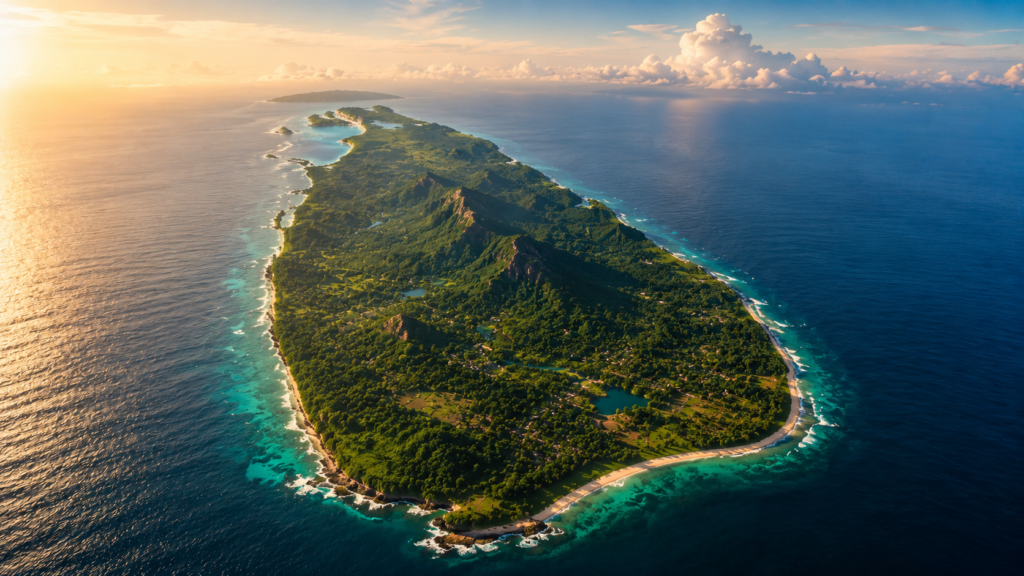
The Complete History of Sri Lanka. For thousands of years, Sri Lanka has stood at the crossroads of the Indian Ocean, connecting the civilizations of Asia, the Middle East, Africa, and Europe. Despite its relatively small size, the island has played an extraordinary role in world history, serving as a center of maritime trade, religious exchange, engineering innovation, and political power.
Known throughout history by many names including Lanka, Taprobane, Serendib, Ceylon, and finally Sri Lanka the island has witnessed the rise of powerful kingdoms, remarkable rulers, advanced irrigation systems, the arrival of Buddhism, foreign invasions, European colonial rule, the struggle for independence, and the challenges of building a modern democratic nation.
This series explores that remarkable journey in chronological order, combining historical research with clear, engaging storytelling to help readers understand how Sri Lanka became the nation it is today.
Whether you are a student, researcher, history enthusiast, or simply curious about one of South Asia’s oldest civilizations, this series is designed to provide a comprehensive and accessible guide to Sri Lanka’s past.
Why Sri Lanka Matters
Sri Lanka’s history extends back thousands of years and has influenced far more than its geographical size might suggest.
Throughout history, the island has been renowned for:
- One of the world’s oldest continuously inhabited civilizations
- Sophisticated ancient irrigation and water management systems
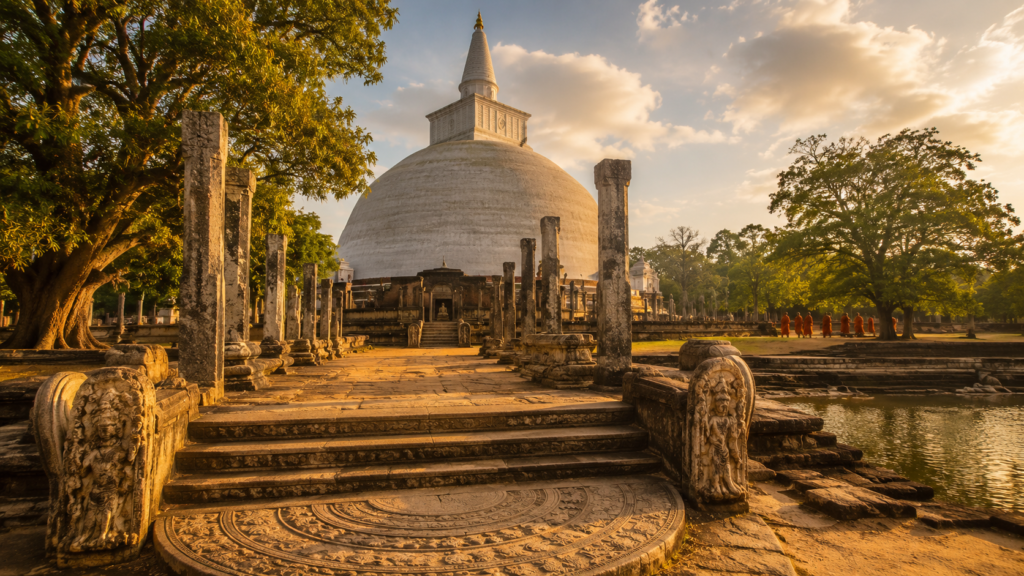
- The introduction and preservation of Theravāda Buddhism
- Strategic control of Indian Ocean trade routes
- Rich cultural, religious, and ethnic diversity
- Resistance against multiple foreign invasions and colonial powers
- A long and complex journey toward modern democracy
Its story is one of resilience, innovation, conflict, and cultural exchange.
About This Series
The Complete History of Sri Lanka is CurioReader’s flagship history series, created to present Sri Lanka’s history in a clear, chronological, and evidence-based format.
Unlike isolated articles that focus on individual events or rulers, this series connects each historical period to the next, helping readers understand the broader story of the island’s development over thousands of years.
The series covers:
- The earliest human settlements
- Ancient legends and historical origins
- The rise and fall of great kingdoms
- South Indian invasions and political change
- European colonial rule under the Portuguese, Dutch, and British
- Independence in 1948
- The political, social, and economic development of modern Sri Lanka
New articles will be added regularly, making this page the central hub for the entire collection.
Reading Order
Follow the story in chronological order.
Part 1 – Before the Kingdoms
- Prehistoric Sri Lanka: The Island’s First Inhabitants
- Prince Vijaya and the Origins of the Sinhalese Kingdom
Part 2 – The Age of Great Kingdoms
- The Anuradhapura Kingdom: Rise, Golden Age, and Fall
- South Indian Invasions and the Chola Occupation
- The Polonnaruwa Kingdom: Rebuilding a Nation
Part 3 – The Transitional Kingdoms
- The Dambadeniya Kingdom
- The Yapahuwa Kingdom
- The Kurunegala Kingdom
- The Gampola Kingdom
- The Kotte Kingdom
Part 4 – The Last Kingdom
- The Kandyan Kingdom
Part 5 – Colonial Ceylon
- Portuguese Ceylon
- Dutch Ceylon
- British Ceylon
Part 6 – Independent Sri Lanka
- The Road to Independence
- Sri Lanka After 1948
- The Republic of Sri Lanka
- Sri Lanka in the 21st Century
Articles will be published and linked here as they become available.
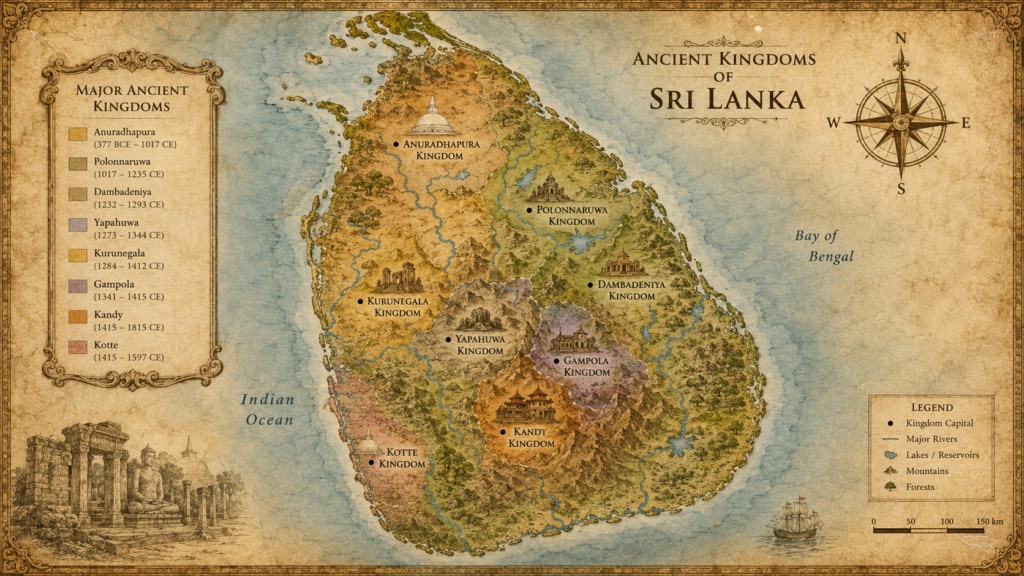
Historical Timeline
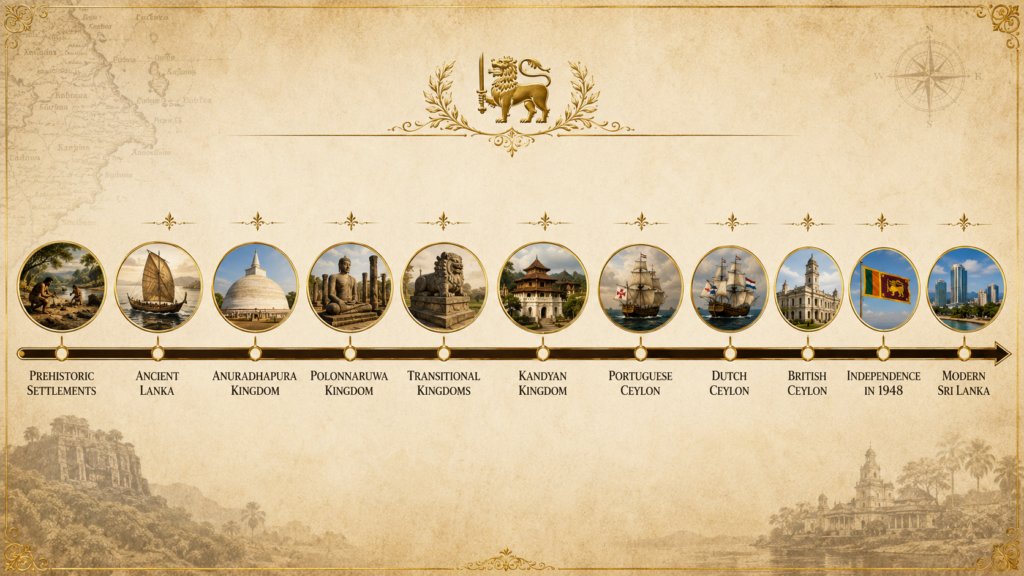
| Period | Approximate Dates |
|---|---|
| Prehistoric Sri Lanka | Before c. 543 BCE |
| Early Historical Period | c. 543–377 BCE |
| Anuradhapura Kingdom | 377 BCE–1017 CE |
| Chola Occupation | 1017–1070 |
| Polonnaruwa Kingdom | 1070–1232 |
| Transitional Kingdoms | 1232–1597 |
| Kandyan Kingdom | 1469–1815 |
| Portuguese Rule | 1505–1658 |
| Dutch Rule | 1658–1796 |
| British Rule | 1796–1948 |
| Independent Sri Lanka | 1948–Present |
What You’ll Discover
Throughout this series, you’ll learn about:
- Legendary kings and influential rulers
- Ancient capitals and royal cities
- Magnificent stupas and temples
- Engineering marvels such as reservoirs and canals
- Maritime trade across the Indian Ocean
- Buddhist heritage and cultural development
- Wars, invasions, and shifting alliances
- Colonial administration and economic transformation
- Independence and the making of modern Sri Lanka
Supporting Topics
Alongside the main series, CurioReader also explores related subjects, including:
- Sigiriya
- Mihintale
- Anuradhapura Sacred City
- Polonnaruwa Ancient City
- Ruwanwelisaya
- Sri Maha Bodhi
- Temple of the Tooth
- Ancient irrigation systems
- Sri Lankan archaeology
- Important historical figures
- Major battles and treaties
These supporting articles provide deeper insight into the people, places, and events that shaped Sri Lanka’s history. Articles will be published and linked here as they become available.
Begin the Journey
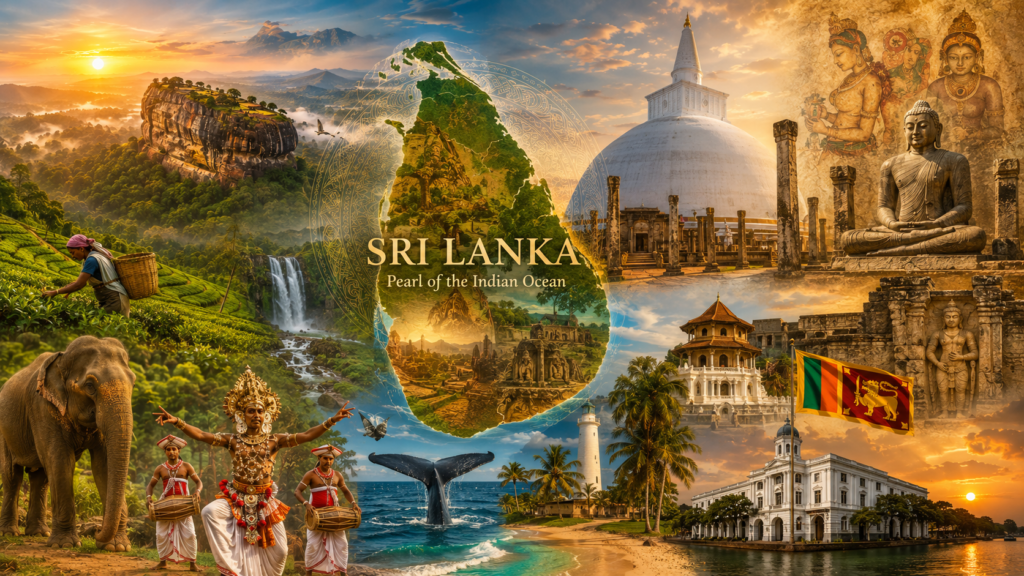
The story of Sri Lanka is far more than a sequence of kings and battles. It is the story of a resilient island that became a meeting place of civilizations, preserved one of the world’s oldest cultural traditions, and overcame centuries of conflict and colonial rule to emerge as an independent nation.
From the earliest evidence of human settlement to the challenges and achievements of the twenty-first century, every chapter reveals another part of this remarkable journey.
We invite you to explore the series, follow the timeline, and discover the rich and enduring history of the Pearl of the Indian Ocean.